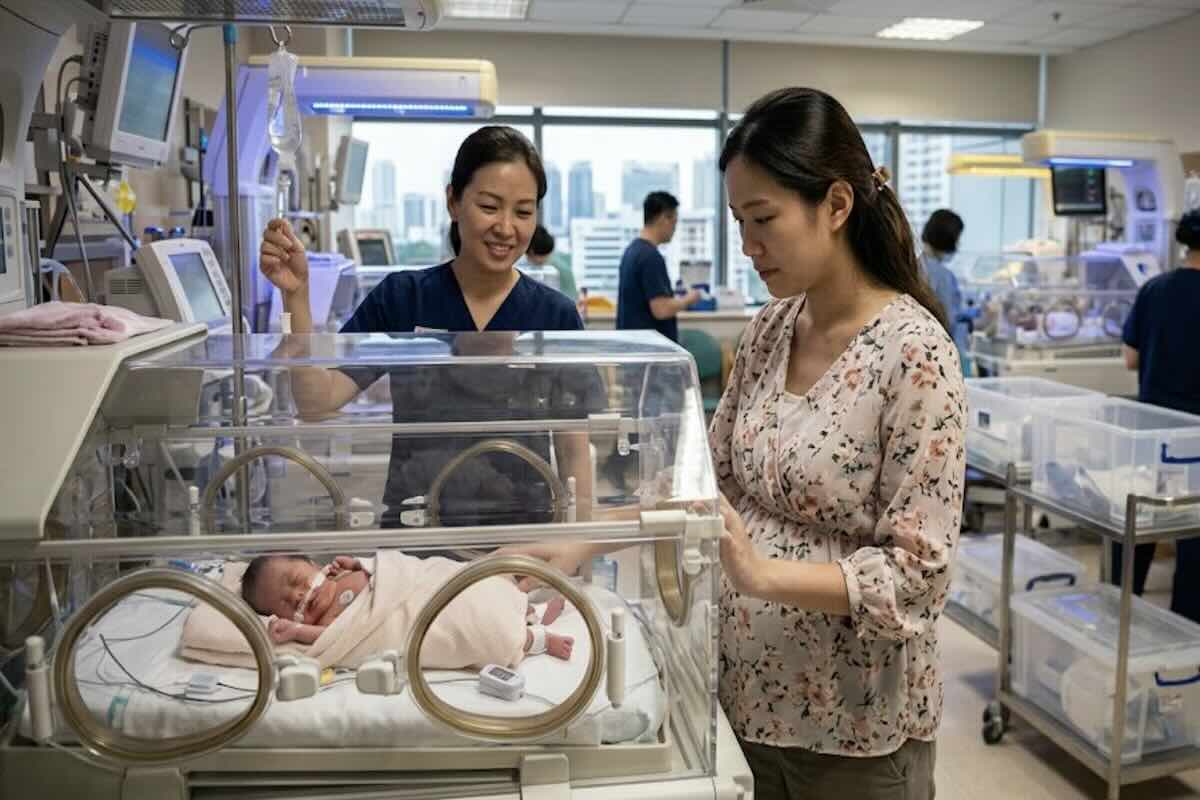

A premature birth can be stressful for expectant parents. Beyond concerns about the baby’s health, families may face high costs if their newborn needs treatment in a Neonatal Intensive Care Unit (NICU).
Maternity insurance coverage provides financial benefits when specified pregnancy complications, congenital conditions, or qualifying neonatal events occur. It does not automatically pay every NICU bill. Whether a claim is payable depends on why the baby is admitted and whether the medical condition falls within the policy terms.
MediShield Life and Integrated Shield Plans provide another layer of protection by covering eligible hospitalisation expenses. Understanding the role of each type of insurance can help parents assess where they may still have financial gaps.
Key takeaways
- Buy maternity insurance early because many plans are only available before a certain stage of pregnancy and may require an existing life or health insurance policy.
- Compare the actual list of covered congenital conditions rather than relying only on the advertised number of conditions or premium.
- Maternity insurance generally provides fixed benefits and does not automatically reimburse the full cost of hospital bills.
- Review waiting periods and eligibility requirements carefully, including conditions linked to an Integrated Shield Plan.
- Pre-existing pregnancy complications or diagnosed medical conditions are generally excluded from cover, making early purchase important for broader protection.
What is the NICU?
The Neonatal Intensive Care Unit, or NICU, is a specialised hospital ward for newborns who need close monitoring or advanced treatment after birth.
Babies admitted to the NICU may need breathing support, intravenous medication, specialised feeding, continuous monitoring, or surgery depending on their condition.
Common reasons for NICU admission include:
- Premature birth
- Low birth weight
- Respiratory distress syndrome
- Serious infections
- Congenital heart defects
- Other congenital conditions requiring specialist care
Not every premature baby needs NICU care, and not every NICU admission is caused by prematurity. The underlying diagnosis matters because insurers generally assess the reason for admission rather than the NICU stay itself when deciding whether a claim is payable.
How maternity insurance coverage applies to NICU and premature birth
Most maternity insurance policies do not provide a benefit simply because a baby has been admitted to the NICU. The medical circumstances must meet the policy’s specified conditions.
Benefits are usually triggered by an insured event such as a covered pregnancy complication, congenital illness listed in the policy, or qualifying neonatal condition. Depending on the insurer, payouts may take the form of lump sums, daily hospital benefits, or death and disability benefits instead of direct reimbursement of hospital bills.
Two babies who each spend two weeks in the NICU may therefore receive different insurance payouts because the reason for admission and policy definitions determine which benefits apply.
| Scenario | Likely coverage |
| Baby admitted for a covered congenital heart defect | Hospitalisation benefits plus possible maternity insurance payout |
| Baby born prematurely because of a covered pregnancy complication | Hospitalisation benefits and potentially a lump-sum maternity benefit |
| Baby admitted for observation without a covered diagnosis | Hospitalisation coverage may apply |
Parents should review the insurer’s list of covered pregnancy complications and congenital conditions before purchasing a policy.
Read more: Should Parents Buy Hospitalisation Insurance for Their Kids?
How insurance covers NICU care in Singapore
NICU expenses may involve several layers of insurance protection. MediShield Life, Integrated Shield Plans, and maternity insurance each serve a different purpose.
| Insurance | Covers NICU hospital bills | Covers pregnancy complications | Covers congenital conditions |
| MediShield Life | Yes, subject to claim limits and eligibility | Hospitalisation only | Hospitalisation only |
| Integrated Shield Plan | Yes, depending on your plan, but not for premature situations as coverage for IP starts the earliest at day 15, and would not cover pre-existing conditions | Enhanced hospital benefits | Enhanced hospital benefits, but only after the waiting period |
| Maternity insurance | Usually provides specified benefits rather than paying hospital bills directly | Yes, if listed in the policy | Yes, if listed in the policy |
MediShield Life and NICU coverage
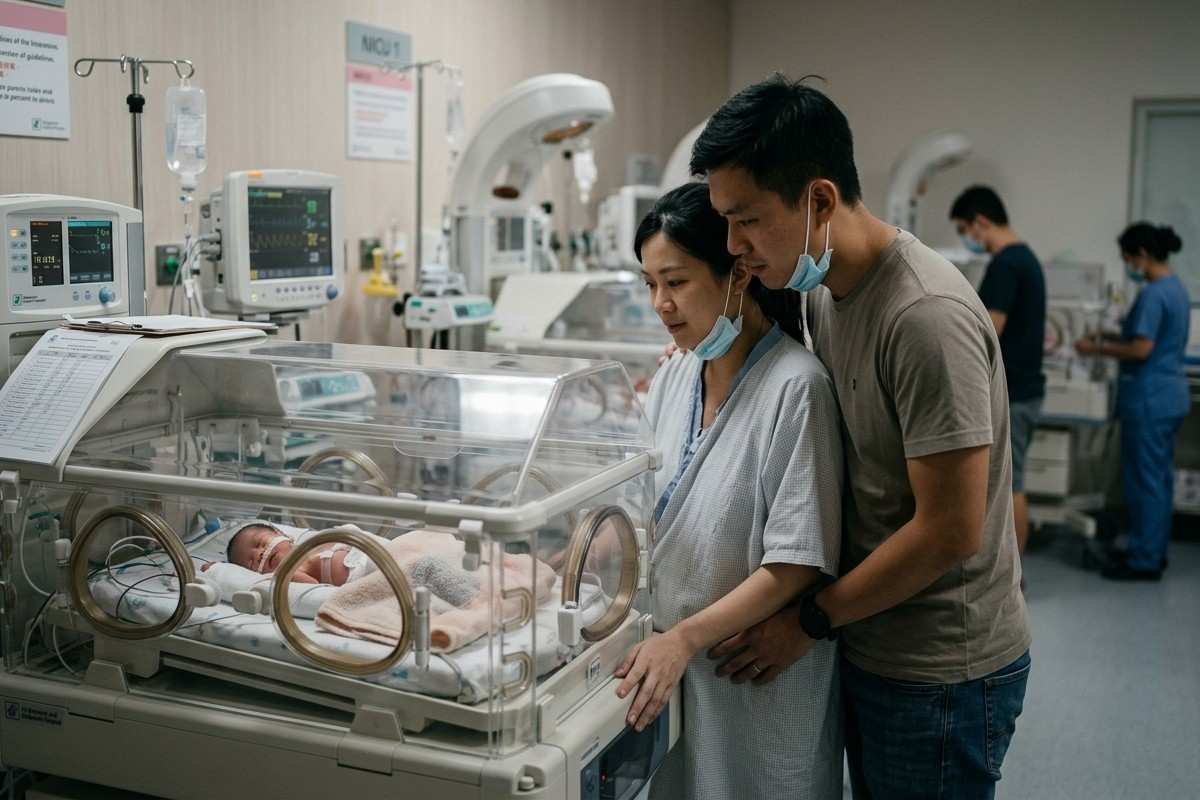
MediShield Life is Singapore’s basic national health insurance scheme and helps cover large hospital bills and selected costly outpatient treatments.
According to MOH, babies born in Singapore are automatically enrolled in MediShield Life, including newborns with congenital and neonatal conditions. If a newborn is admitted to the NICU, eligible hospitalisation expenses may be claimable subject to deductibles, co-insurance, and claim limits.
Integrated Shield Plans
Integrated Shield Plans build on MediShield Life and can provide higher hospital coverage depending on the selected plan, including access to private hospitals or higher-class wards that reduce out-of-pocket expenses for eligible hospitalisation.
The main limitation is timing. A baby’s own IP can start only from day 15 after birth, so it does not provide coverage from birth. For premature babies admitted to the NICU, coverage may not begin until after discharge. As a result, the NICU stay will not be covered, and conditions diagnosed before the policy starts may be treated as pre-existing and excluded.
Some insurers offer limited newborn or congenital benefits under the parent’s own policy, but these are capped and usually require the parent to have held the plan for a qualifying period, with congenital conditions covered only after a waiting period that varies by insurer. Parents should review annual claim limits, deductibles, co-insurance, panel hospital requirements, pre-authorisation conditions, and newborn eligibility rules.
Read more: How To Choose the Right Hospitalisation Plan in Singapore
What does maternity insurance coverage pay for?
Unlike hospitalisation insurance, maternity insurance generally provides specified cash benefits when an insured event occurs.
Depending on the insurer, covered benefits may include:
- Pregnancy complications
- Covered congenital illnesses
- Child critical illness
- Hospitalisation cash benefits
- Death or disability benefits
Families can use cash benefits towards NICU bills not fully covered by health insurance, lost income during a prolonged hospital stay, follow-up specialist care, or home support after discharge.
Why premature birth may be covered
Premature birth can lead to maternity insurance benefits when it meets the definitions and conditions stated in the policy. Prematurity on its own is not always an insured event.
Insurers may provide benefits when premature delivery results from a covered pregnancy complication such as:
- Pre-eclampsia
- Placental abruption
- Placenta praevia
- Eclampsia
- Medically necessary early delivery
The exact list differs between insurers, so policy wording matters when comparing maternity insurance plans. Some plans also cover newborn complications associated with premature birth, while others limit benefits to specified congenital conditions.
Maternity insurance plans in Singapore that cover premature birth and NICU
The maternity insurance plans available through Planner Bee all include premature birth requiring NICU or HDU care under the child hospital care benefit. The main differences are the daily benefit rate, maximum payable days, and any additional lump sum benefits.
| Plan name | Premature birth or NICU benefit | Key detail |
| Great Eastern Maternity Protect & Maternity Protect Multiplier | 2% of sum assured per day for up to 30 days | Also pays 15% of sum assured for a medically necessary caesarean delivery before 36 weeks for a singleton pregnancy |
| HSBC Life EmpoweredMum | 2% of sum assured per day for up to 30 days | Also pays 15% of sum assured for a medically necessary caesarean delivery before 36 weeks for a singleton pregnancy |
| Income Maternity 360 | 1% of sum assured per day for up to 30 days | Benefit capped at 30% of sum assured |
| Manulife ReadyMummy | 1% of sum assured per day for up to 30 days | Benefit capped at 30% of sum assured |
| Prudential PRUMum | 2% of sum assured per day for up to 25 days | Hospital Care Accelerator may pay 50% of sum assured for a qualifying ICU stay of at least 3 consecutive days |
| Prudential PRUFirst Promise | 2% of sum assured per day for up to 25 days | Same NICU benefit structure as PRUMum and bundled with a whole life plan |
| Singlife Maternity Care | 1% of sum assured per day for up to 30 days | Benefit capped at 30% of sum assured |
Note: Figures are drawn from each insurer’s current product brochure. Check the latest product summary before quoting.
Where the plans differ
The daily hospital benefit is only one part of the comparison. Prudential and HSBC Life include additional benefits that work differently from the standard NICU daily payout.
Prudential’s PRUMum and PRUFirst Promise include a Hospital Care Accelerator Benefit that can pay 50% of the sum assured when the child has a qualifying ICU stay of at least 3 consecutive days. The combined child Hospital Care and Hospital Care Accelerator payout is capped at 50% of the sum assured.
HSBC Life EmpoweredMum has a separate Early Delivery by Caesarean Section benefit. It pays 15% of the sum assured for a medically necessary caesarean delivery before 36 weeks for a singleton pregnancy. A pre-term vaginal delivery does not trigger this benefit.
Why benefit caps matter
The daily percentage should be considered together with the maximum number of payable days.
On a $10,000 sum assured, a 2% daily benefit for 30 days totals $6,000. At the same daily rate for 25 days, the maximum is $5,000. HSBC Life EmpoweredMum’s 15% Early Delivery by Caesarean Section benefit would pay $1,500 on the same sum assured when its conditions are met.
For a prolonged NICU stay, these limits can make a meaningful difference to the total benefit received.
Read more: Best Maternity Insurance in Singapore
NICU cost Singapore parents should consider
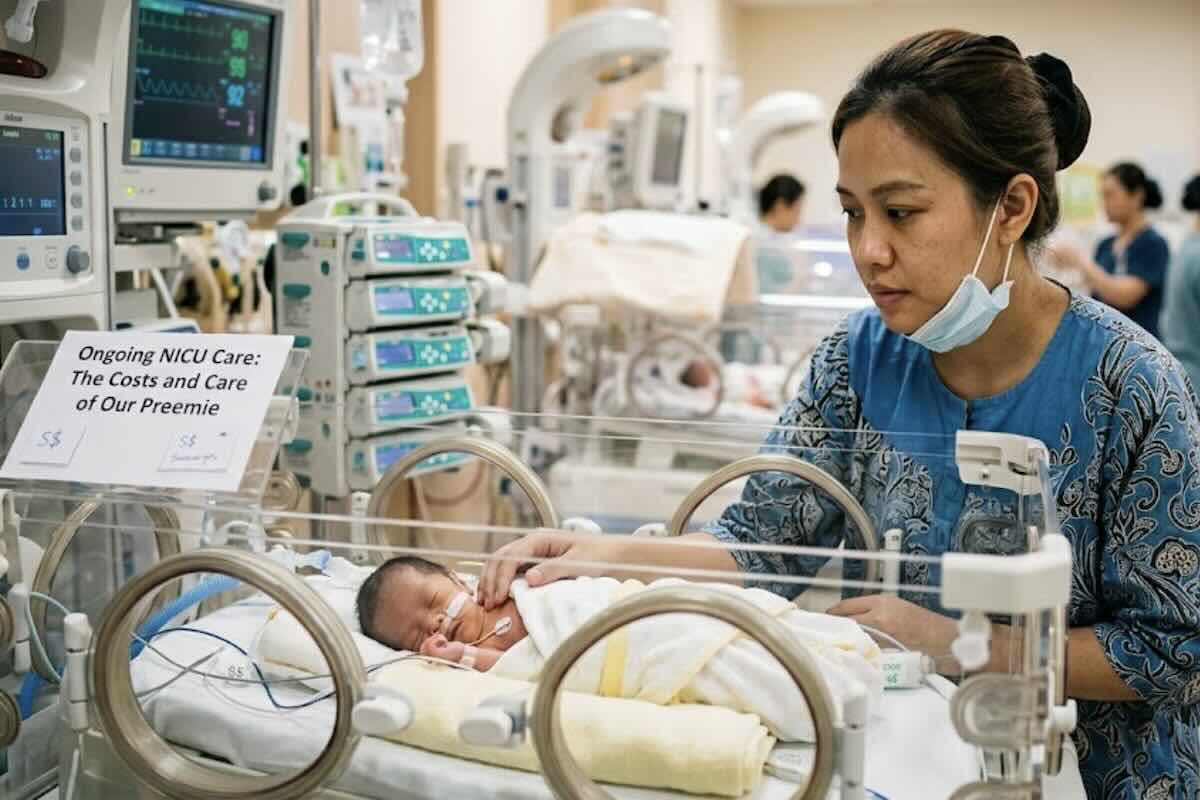
NICU costs in Singapore can vary considerably depending on the baby’s medical needs and where care is provided.
Costs depend on the baby’s gestational age, birth weight, medical complications, length of stay, and whether care is received at a public or private hospital. For babies requiring prolonged intensive care, total bills can run from several thousand to tens of thousands of dollars before subsidies and insurance are applied.
Example scenario 1: Baby born at 35 weeks
A baby born at 35 weeks requires a 5-day NICU stay with oxygen support at a public hospital.
MediShield Life and hospital subsidies reduce the eligible hospitalisation expenses. If the premature birth resulted from a covered pregnancy complication, the mother’s maternity insurance may also provide a benefit.
Example scenario 2: Baby born at 28 weeks
A baby born at 28 weeks spends 45 days in the NICU and requires respiratory support, multiple specialist consultations, and ongoing developmental follow-up after discharge.
MediShield Life helps cover eligible medical expenses throughout the stay. If the relevant policy conditions are met, maternity insurance coverage can provide additional financial support for bills, lost income, or post-discharge care.
The examples show why both the length of the NICU stay and policy benefit limits matter when estimating potential out-of-pocket costs.
Read more: How Much Newlyweds Should Save for Baby Expenses in Singapore?
What maternity insurance usually does not cover
Maternity insurance policies commonly include exclusions that determine when benefits are not payable.
Most maternity insurance policies do not cover:
- Routine newborn nursery care
- Normal delivery costs
- Elective Caesarean sections without medical indication
- NICU admission where there is no covered diagnosis
- Conditions already known before the policy was purchased
- Cosmetic or non-medically necessary procedures
Parents should read the policy wording carefully to understand both inclusions and exclusions before committing to a plan.
What parents often miss about maternity insurance coverage
Policy terms can affect eligibility and payouts just as much as the headline benefits.
1. Buy before pregnancy
Many plans are only available before a certain stage of pregnancy. Others require the mother to already hold an eligible life or health insurance policy. Buying too late can mean being unable to obtain coverage.
2. Covered conditions differ significantly
One insurer may cover more than 20 congenital conditions, while another may cover far fewer. Compare the actual condition lists rather than assuming all maternity insurance plans provide the same protection or looking only at premiums.
3. Lump sums are fixed
A maternity insurance payout is a predetermined amount based on the policy’s benefit structure. It does not automatically reimburse every hospital bill, so it should be treated as supplementary financial support.
4. Waiting periods
Some insurers require policies to be in force before conception or before a certain stage of pregnancy. Check these requirements carefully, including any conditions under the mother’s Integrated Shield Plan that may apply to maternity-related claims.
5. Pre-existing exclusions
Complications that were known or diagnosed before the policy was purchased are generally excluded. Buying within the appropriate eligibility period can provide broader protection within the policy terms.
Conclusion
Maternity insurance coverage can provide additional financial support if a pregnancy complication, congenital condition, or qualifying neonatal event leads to NICU care. For parents comparing pregnancy insurance in Singapore options, the amount available depends on the policy’s covered events and benefit limits.
When comparing maternity insurance plans in Singapore, look beyond the premium. Check the covered conditions, benefit rates, day caps, payout limits, waiting periods, and how the policy fits with your existing hospitalisation coverage.
Planner Bee can help parents compare maternity insurance in Singapore options and understand how different plans may fit alongside their existing health coverage before their baby arrives.
Frequently asked questions
Does maternity insurance pay all NICU bills?
No. Hospital bills are generally covered through MediShield Life and Integrated Shield Plans. Maternity insurance coverage typically provides a lump-sum cash benefit for covered medical events, which families can then use toward outstanding bills or other expenses.
Is premature birth automatically covered?
Not always. Coverage depends on whether the premature birth resulted from a covered pregnancy complication or qualifying newborn condition as defined in the policy. Read the specific condition list before purchasing.
Can I buy maternity insurance after learning my baby may be premature?
In most cases, no. Maternity insurance coverage is designed to be purchased before pregnancy or within the insurer’s eligibility window. Existing complications are generally excluded from coverage.
Does MediShield Life cover premature babies?
Yes. According to CPF, eligible hospitalisation expenses for newborns, including those requiring NICU treatment, may be claimable under MediShield Life, subject to the scheme’s terms and claim limits.
Should I buy an Integrated Shield Plan as well?
An IP can provide meaningfully higher hospital coverage than MediShield Life alone, particularly if you prefer treatment at a private hospital or a higher-class ward. It is worth reviewing alongside your maternity insurance plans.