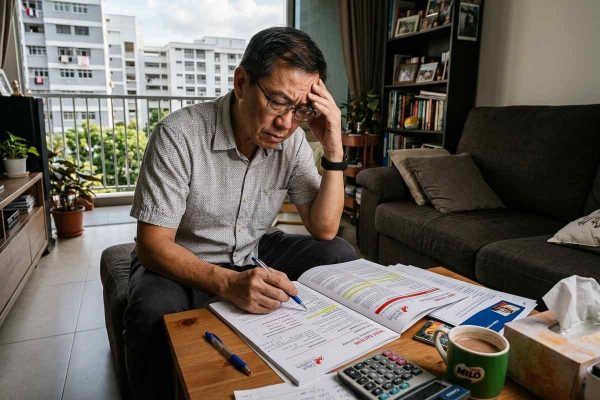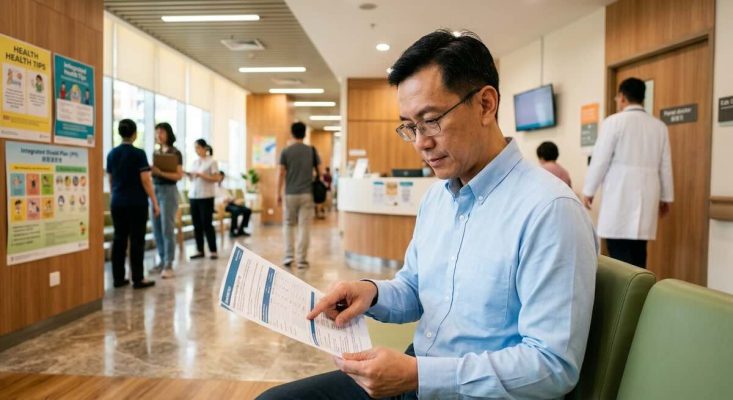

Medical insurance for elderly parents in Singapore typically starts with MediShield Life, while an Integrated Shield Plan can provide broader hospital coverage if your parent qualifies and prefers higher-class wards or private hospitals. Costs rise significantly with age, so families should consider not just current premiums but also future affordability, existing health conditions, and separate long-term care expenses.
Medical insurance for elderly parents mainly helps cover hospitalisation and medical treatment costs as parents grow older. In Singapore, MediShield Life usually forms the foundation of coverage, while an Integrated Shield Plan or other insurance can supplement it based on your parent’s healthcare needs and preferred hospital or ward class.
MediShield Life mainly covers subsidised B2 and C ward treatment, so families may pay more out of pocket if a parent chooses a higher-class ward or private hospital. When comparing health insurance for parents, eligibility also matters because age and existing health conditions can affect whether a parent qualifies for new private coverage and the terms offered.
Medical expenses can also continue long after a hospital stay. Channel NewsAsia has reported on the growing use of nursing homes and home-based care in Singapore. These arrangements can create costs that last for months or years, adding to the financial pressure on adults supporting both children and elderly parents.
What coverage do your parents already have?
Singapore’s government healthcare and long-term care schemes provide several layers of baseline protection. Knowing what each scheme covers makes it easier to see where additional health insurance for parents may be useful.
The main schemes that matter most for this comparison are shown below.
| Scheme | Purpose | Who is covered | Main limitation |
| MediShield Life | Basic hospitalisation and selected medical treatment coverage | All Singapore Citizens and Permanent Residents | Claim limits are based on subsidised B2 / C ward rates |
| ElderShield | Financial support for severe disability | Eligible Singapore Citizens and Permanent Residents born before 1980 | Monthly payouts are limited to 60 or 72 months, depending on the plan |
| CareShield Life | Long-term care support for severe disability | Singapore automatically enrols Citizens and Permanent Residents born on or after 1 January 1980. From December 2021, Singapore also automatically enrolled those born between 1970 and 1979 who had ElderShield 400 coverage. Those born before 1970 may apply to join voluntarily. | Eligibility for payouts depends on meeting the severe disability criteria |
| Pioneer Generation Package | Additional healthcare subsidies | Eligible Singaporeans born in 1949 or earlier | Benefits depend on the specific healthcare service and eligibility |
| Merdeka Generation Package | Additional healthcare subsidies | Eligible Singaporeans born from 1950 to 1959 | Benefits depend on the specific healthcare service and eligibility |
When extra private hospital cover may help
Government schemes provide a basic level of protection, but private insurance can cover some of the additional costs associated with higher-class wards and private hospital treatment. The gap between the two matters when deciding how much additional coverage is worth paying for.
An Integrated Shield Plan builds on MediShield Life by providing additional hospitalisation coverage. Depending on the plan, it can cover treatment in higher-class wards or private hospitals.
Before deciding whether to buy health insurance for parents,
compare their existing MediShield Life protection with the potential out-of-pocket cost of the hospital and ward class they would prefer.
How much do Integrated Shield Plans cost for elderly parents?

An Integrated Shield Plan adds private insurance coverage to the basic protection provided by MediShield Life. For an older parent, the decision comes down to whether they can qualify, what terms the insurer offers, which hospitals and specialists they can access, and whether the premiums remain manageable.
Eligibility and underwriting
Entry age limits determine whether an insurer will accept a new IP application. According to MOH, most insurers stop accepting new IP applications at age 75, although limits can vary by insurer and plan.
Insurers also review an applicant’s medical history. A pre-existing condition may lead to a premium loading, an exclusion, a deferment, or a declined application, so the final terms can differ from the advertised rate.
Read more: How to Get Insurance with Pre-Existing Medical Conditions
Integrated Shield Plans currently available in Singapore
Singapore has seven insurers approved to offer Integrated Shield Plans. All seven list a maximum new entry age of 75. The plans below cover private hospitals, Class A, and Class B1 tiers.
| Plan name | Annual claim limit | Pre- and post-hospital |
| Private hospital plans | ||
| AIA HealthShield Gold Max A | S$2,000,000 | 13 months and 13 months |
| Great Eastern GREAT SupremeHealth P PLUS | S$1,500,000 | 180 days and 365 days |
| Great Eastern GREAT SupremeHealth P Prime | S$2,500,000 | 180 days and 365 days |
| HSBC Life Shield A | S$2,500,000 | 180 days and 365 days |
| Income Enhanced IncomeShield Preferred | S$1,500,000 | 180 days and 365 days |
| Prudential PRUShield Premier | S$2,000,000 | 180 days and 365 days |
| Raffles Shield A with Raffles Hospital Option | S$600,000 | 180 days and 365 days |
| Raffles Shield Private | S$1,500,000 | 180 days and 365 days |
| Singlife Shield Plan 1 | S$2,000,000 | 180 days and 365 days |
| Class A plans | ||
| AIA HealthShield Gold Max B | S$1,000,000 | 180 days and 180 days |
| Great Eastern GREAT SupremeHealth A PLUS | S$1,000,000 | 180 days and 365 days |
| HSBC Life Shield B | S$1,000,000 | 180 days and 365 days |
| Income Enhanced IncomeShield Advantage | S$500,000 | 100 days and 100 days |
| Prudential PRUShield Plus | S$1,000,000 | 180 days and 365 days |
| Raffles Shield A | S$600,000 | 180 days and 365 days |
| Singlife Shield Plan 2 | S$1,000,000 | 180 days and 365 days |
| Class B1 plans | ||
| AIA HealthShield Gold Max B Lite | S$300,000 | 100 days and 100 days |
| Great Eastern GREAT SupremeHealth B PLUS | S$500,000 | 180 days and 365 days |
| HSBC Life Shield Standard Plan | S$200,000 | Not applicable |
| Income Enhanced IncomeShield Basic | S$250,000 | 100 days and 100 days |
| Prudential PRUShield Standard | S$200,000 | Not applicable |
| Raffles Shield B | S$300,000 | 90 days and 90 days |
| Singlife Shield Plan 3 | S$500,000 | 180 days and 365 days |
Raffles Shield A with the Raffles Hospital Option covers public hospitals and Raffles Hospital only. Other private hospitals are not covered under this variant. Families who want access across Singapore’s major private hospitals would need to consider a full private-tier plan instead.
Read more: Best Integrated Shield Plans in Singapore
Annual IP premiums by age and hospital tier
Annual IP premiums generally rise with age and vary by insurer and hospital tier. The ranges below show how much the cost of hospitalisation coverage can change as a parent gets older.
The figures are based on published premium tables from Prudential, HSBC Life, Singlife, Raffles Health Insurance, and Great Eastern for Singapore Citizens and Permanent Residents. They are effective from 1 April 2026 and include 9% GST.
All figures include the MediShield Life component and apply to standard lives without pre-existing conditions. Premium tables for AIA and Income were not available at the time of compilation.
Premiums are shown on an age next birthday basis. This is the age your parents will turn on their next birthday, which may be one year higher than their current age.
| Parent’s age (next birthday) | Class B1 (restructured hospital) | Class A (restructured hospital) | Private hospital |
| 56–60 | Around S$1,067–S$1,247 | Around S$1,260–S$1,453 | Around S$2,869–S$3,602 |
| 61–65 | Around S$1,386–S$1,719 | Around S$1,615–S$2,014 | Around S$3,555–S$5,120 |
| 66–70 | Around S$1,729–S$2,316 | Around S$2,298–S$2,791 | Around S$4,983–S$7,330 |
| 71–75 | Around S$2,264–S$3,390 | Around S$3,005–S$3,916 | Around S$6,302–S$10,189 |
Current affordability is only part of the calculation. A private-hospital plan costing roughly S$2,869 to S$3,602 at ages 56 to 60 can rise to about S$6,302 to S$10,189 at ages 71 to 75. Families need to consider whether those higher premiums would still be manageable later.
Riders and specialist panels
Specialist panels and optional riders can affect how much a family ultimately pays, even when the main hospital plan has a high coverage limit.
An eligible rider can reduce co-payment on hospital bills, but it will not eliminate the cost entirely. From 1 April 2026, new riders can no longer cover the minimum deductible, and the co-payment cap increased to S$6,000. Policyholders may therefore still need to fund part of an eligible claim.
If your parent already sees a particular specialist, check the insurer’s panel before choosing a plan. A high coverage limit may be less useful if treatment from that specialist comes with lower benefits or higher out-of-pocket costs.
Read more: How to Choose a Private Integrated Shield Plan
Can MediSave help pay for your parents’ IP premiums?
MediSave can offset part of the cost of private hospital insurance. The amount available for the additional private insurance premium depends on the parent’s age.
MediSave can pay the MediShield Life component of an IP premium in full and can also pay part of the additional private insurance premium, subject to the Additional Withdrawal Limit for your parent’s age.
| Parent’s age (next birthday) | MediSave AWL for IP additional premium | MediShield Life component |
| Up to 40 | S$300 per year | Fully payable by MediSave |
| 41–70 | S$600 per year | Fully payable by MediSave |
| 71 and above | S$900 per year | Fully payable by MediSave |
What about long-term care costs?

Long-term care needs a separate budget from hospitalisation coverage because these expenses can recur for years. Nursing home care, day care, home care, and domestic help cover ongoing needs that hospitalisation insurance does not fully address.
How CareShield Life and supplements help
CareShield Life and its supplements provide financial support for severe disability rather than ordinary hospitalisation expenses. Eligibility is based on functional disability criteria rather than diagnosis alone.
A policyholder generally needs to be assessed as unable to perform at least three of six activities of daily living without assistance.
The payout contributes towards care rather than covering every expense, so families may still need to fund part of the cost themselves.
CareShield Life Supplements can provide additional monthly payouts on top of the base benefit, subject to eligibility, insurer requirements and claim criteria. MediSave can be used
for supplement premiums subject to the applicable annual withdrawal limit.
Indicative long-term care costs for elderly parents
Caring for an elderly parent can cost more or less depending on the type and frequency of care and the subsidies your family qualifies for. Budget for these expenses separately from hospitalisation premiums, as they may recur monthly or with each care session.
| Care arrangement | Indicative cost (before subsidies) | Potential government support | What the family may need to pay |
| Subsidised nursing home | From ~S$3,900 per month according to AIC | ILTC subsidies based on per capita household income | From around ~S$400 to S$800 per month after subsidy, depending on eligibility |
| Private nursing home | From ~S$3,000 to S$4,500 per month | Subsidies may be available but are generally lower | Higher out-of-pocket costs |
| Day care centre | From S$55 per session for standard day care or S$63 per session for dementia day care, according to AIC | ILTC subsidies may apply | Depends on the centre, care needs and subsidy eligibility |
| Home personal care | From S$25 per hour according to AIC | Community care subsidies may be available | Depends on the frequency and type of care required |
| Live-in foreign domestic worker | Around ~S$1,200 to S$1,800 per month, including salary, agency fees, and standard levy | Concessionary levy of S$60 per month may apply to eligible households according to MOM | Depends on salary, levy eligibility, and agency costs |
Source: AIC — Nursing Home, AIC — Day Care, AIC — Enhanced Home Personal Care, MOM — FDW Levy Concession
A day care session is typically a half-day or full-day programme at an AIC-approved centre. Confirm the session duration and pricing directly with each provider.
Read more: Best CareShield Life Supplements in Singapore
Government support that may reduce long-term care costs
Several government programmes may reduce long-term care costs depending on your parent’s disability, household income, and care arrangement.
The main forms of support described in the source material are:
- Home Caregiving Grant provides monthly financial support to eligible families caring for a person with moderate to severe disability at home. The amount depends on the prevailing eligibility criteria and household income.
- The Seniors’ Mobility and Enabling Fund helps eligible seniors pay for essential home healthcare items such as catheters and adult diapers, with subsidies of up to 80%. It is available to Singapore Citizens and Permanent Residents aged 60 and above who are receiving eligible community care services. Household monthly income per person must generally be S$4,800 or less.
- ElderFund provides monthly cash payouts to eligible uninsured individuals with severe disabilities and limited financial resources. Eligibility is based on the CPF Board’s income and disability criteria.
Check the current eligibility criteria when budgeting because the amount of support available depends on the programme and household circumstances.
How to assess medical insurance for elderly parents
When assessing medical insurance for elderly parents, consider whether additional coverage is still obtainable, how much financial exposure would remain without it, and whether the premiums will remain manageable as your parents get older. Hospitalisation and long-term care should be reviewed separately because they address different needs.
A practical review can follow this order:
- Check whether your parents can still apply for private coverage and what terms the insurer might offer.
- Estimate what medical expenses could remain after MediShield Life and any existing insurance coverage.
- Compare today’s premiums with the family’s ability to keep paying them.
- Consider how premiums could change over the next five or ten years and whether the coverage would remain affordable.
As a rough guide, annual IP premiums for parents aged 56 to 60 range from about S$1,067 to S$1,453 for restructured-hospital coverage, while private-hospital plans range from about S$2,869 to S$3,602.
By ages 71 to 75, private-hospital premiums can rise to about S$6,302 to S$10,189 a year. Long-term care costs sit outside these hospitalisation premiums and need to be budgeted separately.
Reviewing coverage before a major health event generally leaves families with more options because additional private coverage may become harder to obtain later.
Conclusion
The cost of medical insurance for elderly parents depends on age, existing coverage, health history, preferred hospital tier, and the terms an insurer is willing to offer. MediShield Life provides baseline hospitalisation protection, while private hospital insurance may extend that coverage for parents who qualify and prefer higher-class wards or private hospitals.
Long-term care is a separate financial need. When planning for an elderly parent’s healthcare costs, account for both hospitalisation coverage and recurring care expenses, together with the government schemes and subsidies available to help with them.
Frequently asked questions
What if my parent has a pre-existing condition?
A pre-existing condition does not automatically disqualify an application. The insurer may offer standard coverage, apply a premium loading or exclusion, defer the decision, or decline the application depending on the condition and its underwriting assessment. All declined applications must be declared in future insurance applications when disclosure is required.
At what age should I buy health insurance for parents?
According to MOH, Integrated Shield Plans are generally available to new applicants up to age 75, although entry age limits vary by insurer and plan. Some riders have lower entry age limits, and older applicants may be more likely to face premium loadings, exclusions, or declined applications if they have existing health conditions. A parent who does not obtain an IP before age 75 will generally remain covered by MediShield Life only.
What is the difference between ElderShield and CareShield Life?
ElderShield was the previous long-term care scheme, providing monthly payouts of S$300 or S$400 for up to 60 or 72 months. CareShield Life replaced it for Singaporeans born on or after 1 January 1980, with monthly payouts of S$689 that increase by 2% annually, while those born earlier remain on ElderShield unless they opt in to switch.
What happens if my parent’s IP application is declined?
A declined IP application does not affect MediShield Life coverage, which continues automatically regardless of the underwriting outcome. The decline must be disclosed in future insurance applications when required, as non-disclosure can affect the validity of a subsequent policy.