
Planning for serious illness is a key part of financial protection. Rising medical costs and longer recovery periods have led many Singapore residents to consider insurance that protects not just healthcare expenses, but also income and lifestyle.
Two common options are cancer insurance and critical illness (CI) insurance.
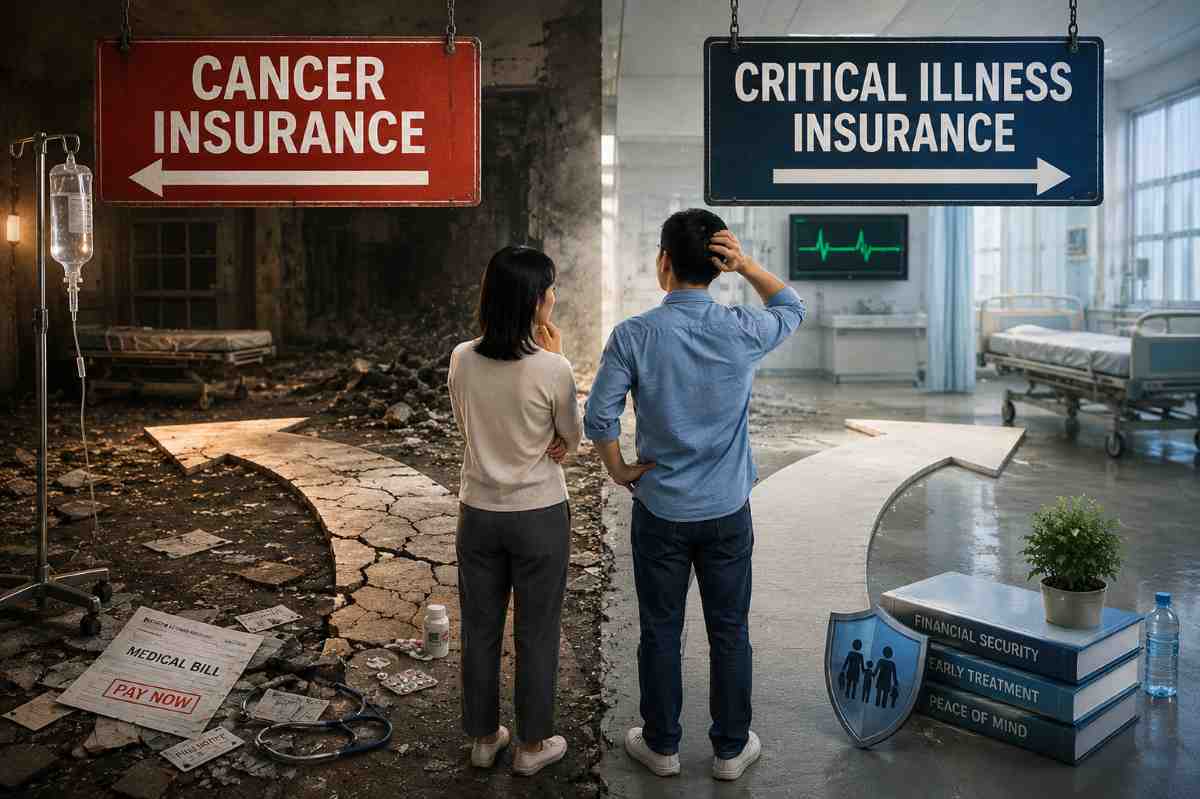
While both provide financial support during major health events, they differ in coverage scope, payout structure, premiums, and claims criteria. Cancer insurance focuses on a single illness, while CI insurance covers a wider range of serious conditions, including cancer.
Understanding these differences can help you choose protection that fits your health risks, budget, and long-term financial planning needs.
What is cancer insurance?
Cancer insurance is a specialised policy designed to address the financial challenges of a cancer diagnosis, treatment, and recovery.
In Singapore, it supplements national schemes and private health insurance by covering costs that are not always fully reimbursed, such as prolonged treatment, specialist care, and income disruption.
Common benefits may include:
- Diagnostics, specialist consultations, surgery, chemotherapy, and radiotherapy.
- Coverage for extended treatment and follow-up care.
- Lump-sum payouts upon diagnosis (offered by many plans).
- Access to specialist networks, second opinions, and support services.
Depending on the policy, benefits may be paid as lump sums, staged payouts, or through coordinated care support to reduce administrative burden.
| Type of cancer insurance | Description / Key features |
| Standalone cancer insurance | Provides cancer-specific protection independent of other policies. Most plans pay a lump sum upon diagnosis and may offer staged payouts by cancer stage. Premiums are usually lower and more predictable due to the focused coverage. |
| Integrated cancer plans | Combine cancer cover with broader health or critical illness insurance under one policy. This can help reduce coverage gaps and streamline underwriting and claims. |
| Multi-benefit cancer insurance | Allows multiple claims over the policy term, covering recurrence or secondary cancers. Some plans restore benefits after treatment, ensuring continued protection. |
| Cancer stage-specific coverage | Aligns payouts with cancer stages, offering support for early detection and higher benefits for advanced treatment. Some plans include screening or survivorship support. |
What is critical illness insurance?
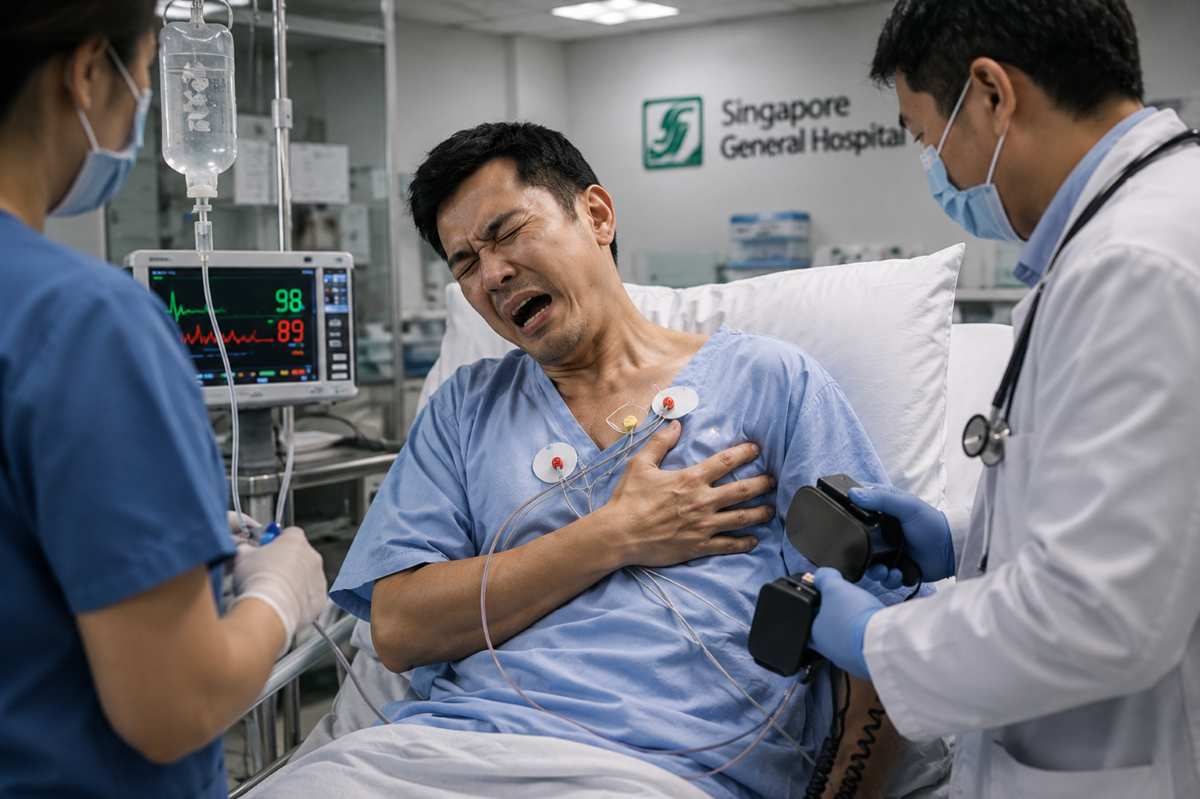
Critical illness insurance pays a cash lump sum if you are diagnosed with a specified serious illness. Unlike hospitalisation or Integrated Shield Plans, CI insurance does not reimburse medical bills, you can use the payout for treatment, living expenses, income replacement, or alternative therapies.
Modern CI plans have evolved from covering only late-stage illness to offering protection across early, intermediate, and severe stages, allowing financial support earlier in the illness journey.
Commonly covered conditions include:
- Cancer
- Heart attack, coronary disease, and heart procedures
- Stroke and neurological disorders
- Kidney failure and organ transplants
- Autoimmune diseases (e.g., lupus, multiple sclerosis)
- Advanced diabetes complications
How CI insurance is structured in Singapore
Under the Life Insurance Association (LIA) Critical Illness Framework 2024, insurers must adopt standardised definitions for 37 severe-stage critical illnesses. Definitions for early and intermediate stages vary by insurer.
| CI structure | Description / Key features |
| Severe / Late-stage CI coverage | Pays the full sum assured upon diagnosis of a severe-stage illness. Designed to address major medical costs and long-term income disruption. |
| Early-stage CI coverage | Pays a partial lump sum when a condition is diagnosed early. Supports early treatment and recovery planning without waiting for disease progression. |
| Multi-claim / Multi-pay CI | Allows multiple payouts for different illnesses or stages over the policy term, providing sustained protection across multiple health events. |
| Standalone CI coverage vs CI riders | CI cover can be bought as a standalone policy or attached as a rider to life insurance. This affects premium cost, coverage duration, and flexibility. |
Read more: What Is Early Critical Illness Insurance, and Do You Need It?
Key differences between cancer insurance and critical illness insurance
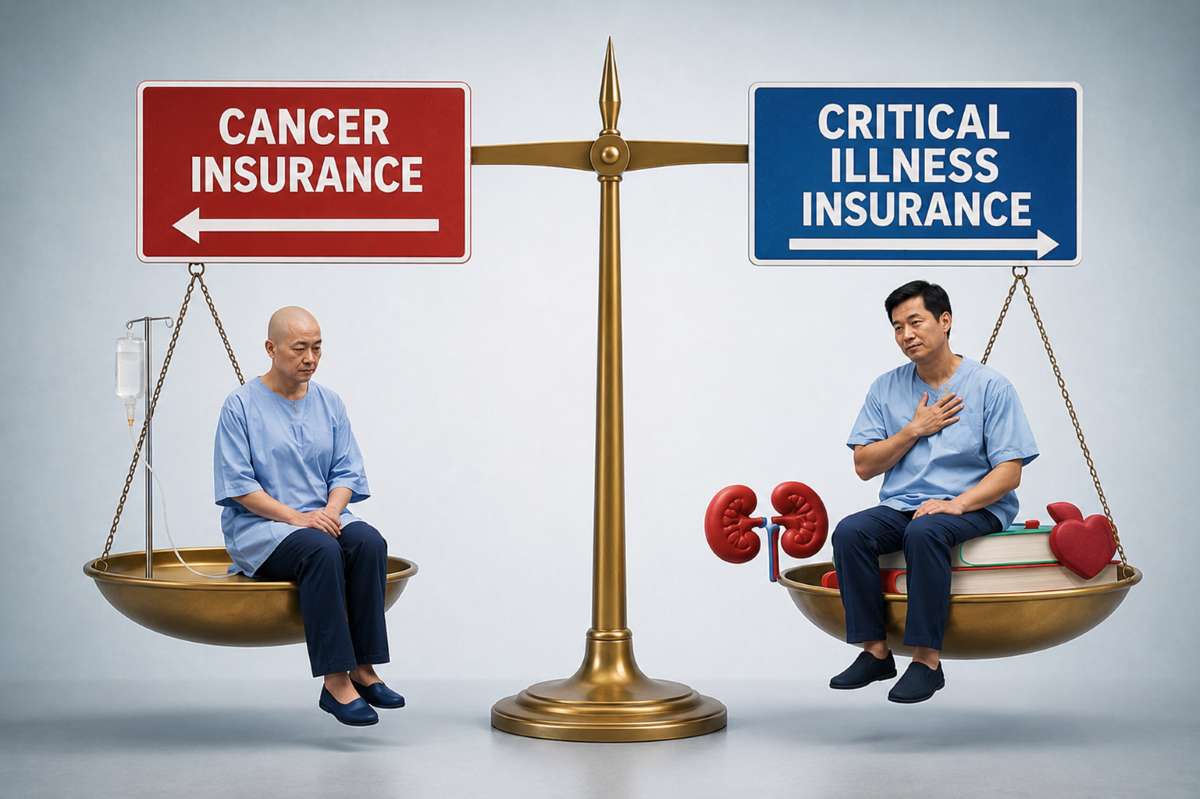
| Aspect | Cancer insurance | Critical illness insurance |
| Coverage scope | Cancer only, across all stages | Multiple serious illnesses, including cancer |
| Payout structure | Lump sum or staged payouts by cancer stage | Lump sum, with modern plans covering early to severe stages |
| Premiums | Generally lower due to single-illness focus | Higher due to broader coverage |
| Claim probability | Higher likelihood for cancer-related claims | Depends on illness definitions and stages covered |
| Policy complexity | Simpler underwriting | More complex, with multiple conditions and riders |
Understanding your health risk profile
Your likelihood of developing cancer or another critical illness depends on several factors:
- Age: Risk increases with age, especially for cancer and cardiovascular disease.
- Gender: Certain illnesses show gender-linked prevalence.
- Family history: Genetic predisposition raises risk.
- Lifestyle: Smoking, diet, activity level, and stress matter.
- Occupation: High-stress or physically demanding roles can elevate risk.
These factors help determine whether focused cancer coverage or broader CI protection is more appropriate.
Cancer trends in Singapore
Cancer remains a major concern despite improving outcomes.
- Singapore’s cancer death rate has fallen by about 21% since 2012, due to better screening and treatment.
- At the same time, new cancer cases have increased, driven by an ageing population and earlier detection.
- Cancer diagnoses among those under 40 have risen by about 34%, highlighting that cancer is not only an older-age risk.
More Singaporeans are living longer with cancer, often requiring extended treatment and recovery support. This increases the relevance of early-stage and staged insurance benefits.
Read more: Everything You Need to Know About Standalone Cancer Insurance
Other critical illness risks
Beyond cancer, conditions such as heart disease, stroke, kidney failure, and neurological disorders remain leading causes of long-term disability and income disruption. This underlines the role of CI insurance in providing broader financial protection.
Case studies
Case study 1 – Young adult with cancer risk focus

Jane, 35, works in IT and has a strong family history of breast cancer.
She undergoes early screening and is diagnosed with stage 1 breast cancer. Jane holds a standalone cancer insurance plan with staged payouts, which provides a lump sum for early-stage treatment. This covers medical expenses, specialist consultations, and supportive care, allowing her to continue working part-time without financial strain.
Key takeaway:
Early-stage cancer coverage is particularly valuable for younger adults, reflecting rising cancer diagnoses below age 40.
Pro tip: If you’d like to check whether your current coverage is sufficient, learn more about cancer insurance plans, or explore cancer coverage options, you can get a personalised quotation here.
Case study 2 – Middle-aged parent with broad health risks
Alan, 52, is an accountant with a family history of heart disease and cancer.
At 54, he suffers a minor stroke, followed by an early-stage prostate cancer diagnosis at 56. Alan has a comprehensive multi-pay CI plan. He receives partial payouts for both conditions, helping to fund rehabilitation, treatment, and household support.
Key takeaway:
Multi-stage CI coverage provides flexibility for individuals who may experience multiple health events over time.
Pro tip: If you want to understand how critical illness insurance could support you, review your existing coverage, or explore your options, you can get a personalised quotation here.
Choosing between cancer and critical illness insurance
Whether cancer insurance or critical illness insurance makes more sense depends on your risk profile and priorities.
Cancer insurance suits those seeking focused protection against cancer, particularly with family history or concern over early-stage treatment costs. Critical illness insurance suits those who want broader protection across multiple serious illnesses.
For many Singaporeans, a combination approach works best, CI insurance as a broad safety net, supplemented by cancer-specific coverage if cancer risk is higher. Assess your age, lifestyle, family history, and finances to build protection that offers both peace of mind and practical support.
Read more: How MediShield Life Changes Will Affect Your Healthcare Costs