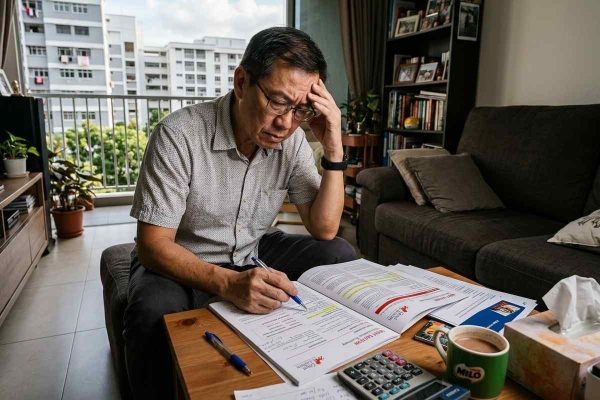
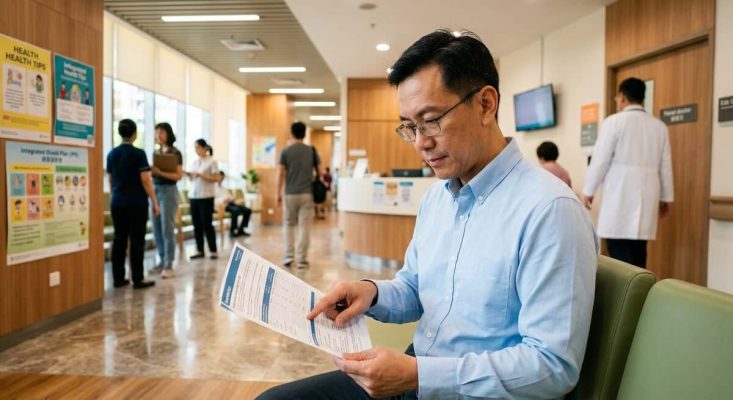
Long-term disability refers to a prolonged inability to work or perform essential daily activities because of illness, injury, or chronic medical conditions. In Singapore, disability income insurance, critical illness insurance, CareShield Life, and emergency savings each protect against different parts of this financial risk.
When Singaporeans evaluate insurance protection, critical illness insurance often receives greater attention because it is widely marketed and commonly purchased. However, long-term disability can create greater financial damage than a critical illness diagnosis because it may affect employment income, CPF contributions, caregiving needs, and retirement savings for many years.
Key takeaways
- Long-term disability can have a greater financial impact than critical illness due to prolonged income loss and recurring care costs.
- Critical illness insurance pays a lump sum after a covered diagnosis, while disability income insurance provides monthly income replacement when disability affects earning ability.
- CareShield Life supports severe disability care costs, but it does not fully replace lost salary.
- A long-term disability can reduce CPF contributions and affect future retirement savings.
- A comprehensive protection strategy may combine critical illness cover, disability income insurance, CareShield Life, CareShield Life supplements, and emergency savings.
Understanding the difference between critical Illness and disability insurance
Critical illness insurance and disability insurance complement each other because they protect against different financial losses arising from illness or injury. Critical illness insurance addresses the financial impact of a covered severe medical diagnosis, while disability insurance addresses the loss of earning ability or functional independence.
In Singapore’s insurance market, a critical illness policy pays a lump sum upon diagnosis of one of the 37 severe-stage conditions standardised by the Life Insurance Association (LIA). These conditions include major cancers, heart attacks of specified severity, stroke with permanent neurological deficit, and end-stage organ failure. Policyholders may use the payout for medical expenses, household spending, or temporary income replacement during recovery.
Disability refers to a sustained inability to work or perform normal daily activities because of injury, illness, or chronic health conditions.
Singapore’s disability insurance framework generally categorises disability into two forms:
- Temporary disability: Short-term incapacity that typically lasts weeks or months because of injury, surgery, or recovery.
- Long-term severe disability: A prolonged or permanent inability to perform at least three of the six Activities of Daily Living (ADLs): eating, dressing, toileting, bathing, walking, and transferring. CareShield Life uses this definition.
Not every disability qualifies for a critical illness claim, and not every critical illness diagnosis results in permanent disability. These risks differ in cause, duration, payout structure, and financial impact, so they require different forms of protection.
Why disability often creates a bigger financial burden

Long-term disability can reduce household income while increasing care-related expenses. This combination creates financial pressure that may persist for years or decades.
Disability affects both income and expenses
Long-term disability affects income, CPF contributions, caregiving costs, housing needs, and transport expenses for Singapore households.
| Financial area | Impact of long-term disability |
| Monthly income | Salary may stop for many years or permanently |
| CPF contributions | Reduced or suspended contributions can lower future retirement savings |
| Caregiving and rehabilitation | Costs may include physiotherapy, nursing support, and long-term care |
| Home modifications | Families may need wheelchair access improvements, bathroom adaptations, or mobility-related changes |
| Transport | Medical appointments and mobility needs can increase transport costs |
Unlike a one-off medical event, these costs can recur while employment income remains reduced or absent. Submit a personalised quotation to Planner Bee for disability income insurance that fits your income, financial commitments, and long-term protection needs.
Many critical illness patients recover and return to work
Critical illness insurance remains important because a severe diagnosis can create immediate medical, recovery, and income replacement needs. Cancer accounted for 26.5% of all deaths in Singapore in 2024, which reinforces why many Singaporeans prioritise critical illness protection for severe medical diagnoses and treatment-related income disruption.
Many critical illness policyholders undergo treatment and recover within a defined period. A lump-sum critical illness payout can bridge this temporary financial gap.
Long-term disability presents a different challenge. Singapore’s life expectancy is 83.9 years, and one in two Singapore residents are expected to develop severe disability at some point in their lifetime. For those who do, the financial exposure can extend for years and frequently exceeds the value of a single lump-sum payment, which is why long-term care coverage deserves separate consideration from critical illness protection.
The real financial risks Singaporeans underestimate
Both critical illness and disability can strain household finances, but each creates different financial risks. A critical illness often forces families to find funds quickly, while a disability can reduce income over the long term and increase ongoing care expenses.
| Risk area | Critical illness | Disability |
| Income loss | May require months or years away from work during recovery | May prevent a person from working for an extended period or permanently |
| Future health risks | Additional illnesses or complications may occur after recovery | Long-term conditions may require ongoing support and care |
| Long-term financial goals | Career interruptions can affect retirement and savings plans | Prolonged income loss can significantly affect long-term financial security |
| Benefit eligibility | Claims depend on meeting the definition of a covered illness | Benefits are generally linked to loss of earning ability or functional capacity |
| Care costs | Often temporary and recovery-related | May involve recurring caregiving, rehabilitation, and support expenses |
| Family impact | Family support is typically temporary during recovery | Family members may need to reduce work or become caregivers |
Critical illness and disability insurance address different financial risks. Understanding these differences can help Singaporeans identify protection gaps and make more informed insurance decisions.
How Singaporeans can protect against disability risk

Disability protection in Singapore typically relies on multiple layers of coverage. Each layer addresses a different level of severity, duration, and financial need.
Disability income insurance for long-term disability
Disability income insurance is a private insurance product that provides monthly benefits when a policyholder cannot work because of illness or injury. In Singapore, it helps protect employment income when disability affects earning ability for an extended period.
This coverage provides recurring monthly benefits designed to replace a portion of lost income during periods of disability. It can support daily living expenses, dependants, mortgage payments, and long-term financial commitments when salary stops.
Read more: Comprehensive Guide to Disability Income Insurance
CareShield Life and Supplements for long-term severe disability
CareShield Life is Singapore’s national long-term care insurance scheme for eligible Singapore citizens and permanent residents. It provides monthly payouts when a person becomes severely disabled and cannot perform at least three of the six Activities of Daily Living.
The CPF Board estimates that one in two Singapore residents will develop severe disability during their lifetime. This statistic highlights the broad relevance of severe disability planning, especially for working adults and households that depend on regular income.
The monthly payout for new CareShield Life claimants in 2026 is S$689. This payout can help with caregiving and long-term care expenses, but it generally covers only part of the actual costs and does not replace salary.
Private CareShield Life supplements offered by insurers such as Singlife, Great Eastern, and Income can raise monthly cash payouts above the base scheme. Higher tiers may provide benefits of several thousand dollars a month. Policyholders may also use CPF MediSave to help pay supplementary premiums, subject to the prevailing Additional Withdrawal Limit set by the authorities.
Pro-tip: To understand how higher monthly payouts may support long-term care costs, compare CareShield Life Supplements with Planner Bee based on your budget, care needs, and existing coverage.
Emergency funds and paid hospital leave for temporary disability
Emergency savings and statutory employment benefits help protect against temporary disability. These resources are most useful when a person faces a short-term recovery period after illness, surgery, or injury.
Eligible employees covered under the Employment Act are entitled to up to 14 days of paid outpatient sick leave and up to 60 days of paid hospitalisation leave per year. Employees become eligible for paid sick leave after three months of service, with entitlements prorated between three and six months. Employees who have completed six months of service receive the full statutory entitlement.
How disability and critical illness create different financial outcomes
The following scenarios show how different health events can affect income over time. All three assume the individual is aged 45 and earns $5,000 per month before the health event occurs.
Ovarian cancer is used as a critical illness example, with a recovery period of around two years before the individual returns to work. Two stroke scenarios are included to show how outcomes can vary: one where the individual cannot work for ten or more years, and one where permanent damage prevents the individual from returning to work until age 65.
Income loss figures are based on a constant monthly salary and are for illustrative purposes only.
| Scenario | Duration that person does not work (hypothetical) | Income loss, excluding inflation and pay increments |
| Ovarian cancer | 2 years | $5,000 / month x 2 years = $120,000 |
| Severe stroke | 10 or more years | $5,000 / month x 10 years = $600,000 |
| Severe stroke with permanent damage | Age 65 – 45 = 20 years | $5,000 / month x 20 years = $1,200,000 |
These figures show how the financial impact of a health event grows with its duration. A critical illness like ovarian cancer can result in $120,000 in lost income, but a severe stroke or permanent disability can push that figure to $600,000 or more.
Without adequate coverage, the shortfall would need to come from savings, family support, or debt. This is why Singaporeans should understand the difference between critical illness and disability coverage. The right combination can help protect income across both short-term and long-term scenarios.
Comparing critical illness and long-term disability side-by-side
Critical illness and long-term disability affect a person’s finances differently over time. The following simplified scenarios demonstrate the potential scale and duration of financial exposure for a Singaporean worker.
Both examples assume an individual experiences a major health event at age 45 and earns $5,000 per month before becoming unable to work. The critical illness scenario assumes the individual receives a $300,000 critical illness payout, takes 18–24 months to recover, and eventually returns to employment.
The disability scenario assumes the individual remains permanently unable to work until age 65. Income-at-risk figures are based on a constant monthly salary and are intended for illustrative purposes only.
Note: These scenarios are illustrative examples designed to compare the potential financial impact of critical illness and long-term disability. Actual outcomes depend on income level, age, recovery, caregiving needs, CPF balances, insurance coverage, and individual circumstances.
| Financial impact | Critical illness | Long-term disability |
| Income replacement | CI lump-sum payout | Disability income insurance |
| Duration of need | Months | Years to decades |
| CPF impact | Lower | Higher |
| Caregiving cost | Moderate and temporary | High and recurring |
| Government scheme | MediShield Life | CareShield Life, with a S$689 monthly payout for new claimants in 2026 |
Source: CareShield Life payout of S$689 per month for new claimants in 2026 from the CPF Board. Disability income coverage varies by insurer and policy terms.
Read more: Best CareShield Life Supplements in Singapore
How to assess your own disability risk
A disability risk assessment helps Singapore workers estimate how a long-term inability to work could affect income, savings, CPF contributions, and family responsibilities. This assessment should consider employment, household structure, existing savings, and insurance coverage.
Key assessment factors include:
| Factor | Why it matters |
| Occupation type | Physical occupations may face higher injury risks, while desk-based roles may face musculoskeletal and stress-related conditions |
| Savings and emergency funds | Larger cash reserves improve resilience against temporary income loss |
| CPF balance and contribution trajectory | A prolonged interruption in contributions can materially affect retirement adequacy |
| Family dependants | Sole breadwinners generally need more income replacement than dual-income households |
Read more: How Singaporeans Can Financially Prepare for Critical Illness
Conclusion
Disability and critical illness can both affect your financial security, but they create different risks. Critical illness insurance helps with the immediate financial impact of a covered diagnosis by providing a lump-sum payout, while disability income insurance protects against the long-term loss of income that can result from an illness or injury preventing you from working. CareShield Life also plays an important role by contributing towards severe disability care costs, although it is not designed to replace your salary.
Because these forms of protection serve different purposes, they work best as part of a broader financial safety net rather than as substitutes for one another. Assessing your income, financial commitments, dependants, and existing insurance coverage can help you identify any protection gaps and build a more resilient financial plan for both short-term recovery and long-term disability.
Frequently asked questions
Should I insure for disability or CI first?
Both products address different risks. Disability income insurance often deserves priority for working adults because it protects against long-duration income loss. Critical illness insurance provides a one-time payment, whereas disability income insurance can provide ongoing monthly support for many years.
Does CareShield Life replace my salary?
No. CareShield Life pays S$689 per month in 2026 and is designed to contribute towards caregiving and long-term care costs. It does not provide full income replacement. Individuals seeking salary replacement generally require disability income insurance or enhanced CareShield Life supplement coverage.
Can I become disabled without suffering a critical illness?
Yes. Disability may result from accidents, musculoskeletal disorders, chronic pain conditions, neurological disorders, or other medical conditions that do not satisfy the LIA definition of critical illness. Separate disability protection remains important because many disabling events do not trigger a critical illness claim.