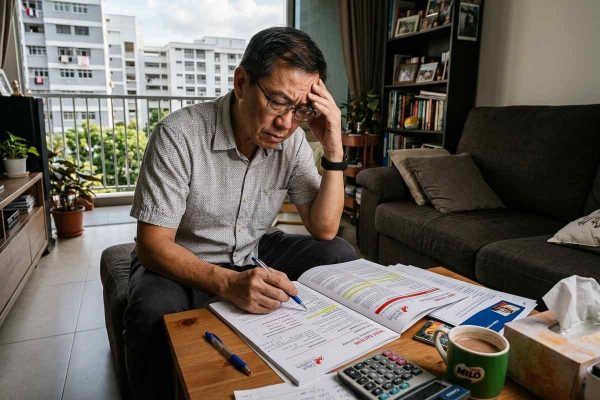
A congenital condition can affect a child and their family medically and financially throughout the child’s life. Singapore’s healthcare system provides hospital coverage from birth, but parents may still need to pay for expenses beyond medical bills, particularly when their child requires ongoing treatment or specialist care.
Maternity policy insurance can provide a lump-sum benefit if the mother or newborn is diagnosed with a covered condition during pregnancy or shortly after birth. Unlike MediShield Life and Integrated Shield Plans, this coverage triggers a payout upon diagnosis rather than based on treatment costs. Families can then use the benefit more flexibly to manage unexpected medical needs.
This guide explains how maternity insurance works alongside Singapore’s healthcare system and provides a maternity insurance comparison Singapore parents can use to assess nine plans. The comparison looks at congenital conditions, benefit structures, guaranteed child policy conversion, and other key features.
Key takeaways
- Maternity policy insurance pays a lump sum when a doctor diagnoses the mother or newborn with a covered congenital condition, complementing MediShield Life and Integrated Shield Plans.
- Singapore currently offers nine maternity insurance plans covering between 23 and 26 congenital conditions, with benefits and guaranteed child policy options varying by insurer.
- Comparing plans involves more than the number of covered congenital conditions. Parents should also review the sum assured, hospital benefits, pregnancy complication cover, and any guaranteed child life, critical illness, or Integrated Shield Plan options.
- Guaranteed child policy figures quoted by insurers are generally maximum purchase or transfer limits set by the insurer and confirmed at the point of application, rather than automatic maternity benefits. Critical illness and early stage critical illness cover is often provided through optional riders on the child’s plan.
- Buy maternity insurance early because insurers limit application windows during pregnancy, and many plans require applicants to meet specific eligibility criteria or exclude pre-existing conditions.
What are congenital conditions covered by maternity insurance?
A congenital condition is a medical condition present at birth due to genetic factors, chromosomal abnormalities, or developmental problems during pregnancy. In insurance, congenital conditions can range from mild structural abnormalities to serious disorders requiring immediate treatment or long-term care.
Common congenital conditions covered by maternity insurance plans in Singapore include:
- Down syndrome (Trisomy 21), a chromosomal condition that affects physical growth and cognitive development.
- Congenital heart defects, such as ventricular septal defects.
- Biliary atresia, a blockage of the bile ducts that can lead to liver damage if left untreated.
- Congenital renal disease, which affects kidney function from birth.
- Cleft lip and cleft palate.
- Spina bifida, caused by incomplete closure of the spine and spinal cord during fetal development.
- Metabolic disorders such as phenylketonuria (PKU), which affect how the body processes certain nutrients.
The number of covered congenital conditions differs between insurers. Two plans may advertise the same number of conditions but cover different diagnoses. Parents with a family history of a specific condition should check the insurer’s product summary to confirm whether it is covered before buying a policy.
Coverage available for congenital conditions in Singapore

Newborns with congenital conditions may receive financial support through three complementary layers of protection in Singapore. MediShield Life covers baseline hospital expenses, Integrated Shield Plans expand hospitalisation benefits, and maternity insurance pays a lump sum when doctors diagnose a covered congenital condition.
MediShield Life coverage
Singapore’s national health insurance scheme, MediShield Life (MSHL), covers all Singapore Citizens and Permanent Residents. It automatically covers every eligible newborn from birth, regardless of any congenital or pre-existing condition.
MSHL covers hospitalisation, day surgery, and selected outpatient treatments. There is no lifetime claim limit, although annual claim limits apply.
However, MSHL does not cover surgical interventions for four rare congenital disorders that are considered severe and fatal by nature:
- Trisomy 13
- Bilateral Renal Agenesis
- Bart’s Hydrops
- Anencephaly
Children diagnosed with other birth defects, such as congenital heart disease or biliary atresia, remain eligible for MediShield Life benefits. Some may also be subject to a 30% premium loading for their first 10 years before standard age-based premiums apply.
The CPF Board also credits every Singapore Citizen newborn with a S$5,000 MediSave Grant for Newborns for children born on or after 1 April 2025. The grant can be used for MediShield Life premiums, eligible hospitalisation expenses, and approved outpatient expenses.
Integrated Shield Plan coverage
Integrated Shield Plans (IPs) built on MediShield Life by increasing hospitalisation benefits for treatment at restructured and private hospitals.
Several maternity insurance plans also offer a guaranteed enrolment option that lets parents purchase an Integrated Shield Plan for their newborn within a specified period after birth without full medical underwriting. This helps preserve the child’s access to future hospitalisation cover.
The congenital condition that triggered the maternity claim is not covered under the child’s IP because it is treated as a pre-existing condition. Integrated Shield Plans also work differently from maternity insurance because they reimburse eligible medical expenses rather than paying a fixed lump sum on diagnosis.
Read more: Your Complete Guide to Integrated Shield Plans in Singapore
How maternity policy insurance complements hospital insurance
Maternity policy insurance provides a fixed benefit that is not tied to the amount of eligible medical expenses incurred, which makes it different from hospital insurance.
When a newborn is diagnosed with a covered congenital condition, the policy pays 100% of the selected sum assured regardless of the actual hospital bill. Depending on the insurer, the available sum assured generally ranges from S$5,000 to S$30,000.
Read more: The Comprehensive Guide to Buying Maternity Insurance in Singapore
Maternity insurance comparison Singapore by congenital conditions covered
The nine maternity insurance plans currently available differ in the number of congenital conditions covered, pregnancy complications included, sum assured options, and whether they are standalone or bundled plans.
The table below ranks all nine plans by the number of covered congenital conditions, from highest to lowest.
| Plan name | Type | Sum assured options (SGD) | Congenital conditions | Pregnancy complications |
| Great Eastern Maternity Protect | Standalone | 5K, 10K, 25K | 26 | 18 |
| HSBC Life Happy Mummy | Bundled | 5K, 10K, 25K, 30K | 26 | 15 |
| Great Eastern Maternity Protect Multiplier | Bundled | 5K, 10K, 25K | 26 | 18 |
| Prudential PRUMum | Standalone | 5K, 10K, 15K, 20K | 25 | 17 |
| Prudential PRUFirst Promise | Bundled | 5K, 10K, 15K, 20K | 25 | 17 |
| AIA Mum2Baby Choices | Bundled | 5K, 10K, 25K | 25 | 14 |
| Manulife ReadyMummy | Standalone | 5K, 10K, 15K, 20K | 24 | 14 |
| Singlife Maternity Care | Standalone | 5K, 10K, 15K, 20K | 23 | 10 |
| Income Maternity 360 | Standalone | 5K, 10K | 23 | 10 |
Sources: Great Eastern, HSBC Life, Prudential PRUMum, Prudential PRUFirst Promise, AIA, Manulife, Singlife, Income
Guaranteed child policy and Integrated Shield options
Some maternity insurance plans allow parents to secure additional life, critical illness, or hospitalisation protection for their child after birth without full medical underwriting.
Each insurer sets the maximum guaranteed-purchase or transfer limits shown below. At the point of application, the policy illustration confirms these limits. These figures do not represent automatic maternity payouts. Critical illness and early stage critical illness cover, where shown, is generally provided through optional riders on the child’s plan.
| Plan name | Guaranteed child life / CI option | Guaranteed IP option for child |
| AIA Mum2Baby Choices | Lets you transfer a life policy and selected riders to your baby within 100 days of birth, giving long-term protection up to age 100. | No |
| Great Eastern Maternity Protect & Maternity Protect Multiplier | Lets you transfer a life policy to your baby or apply for guaranteed cover within 100 days of birth, without medical checks. Coverage can go up to S$350,000 depending on plan and riders. | Yes, you can apply for a Great Eastern Shield plan for your baby within 100 days of birth with just a simple health declaration. |
| HSBC Life HappyMummy | Lets you transfer an existing life policy to your baby within 60 days of birth, without medical checks. Coverage can go up to S$300,000 depending on plan and riders. | Yes, your baby gets a free first-year Shield plan if applied within 60 days of birth, with no medical underwriting. |
| Income Maternity 360 | Simple application within 60 days of birth for a child plan covering up to S$150,000 across death, disability, and critical illness. | No |
| Manulife ReadyMummy | Lets you buy a child life plan within 90 days of birth without medical checks. Optional critical illness riders can be added. | No |
| Prudential PRUFirst Promise | Lets you transfer a life policy to your baby within 60 days of birth, with coverage up to S$500,000 depending on plan. | Yes, you can apply for a Prudential Shield plan for your baby within 14 to 90 days after birth without medical checks. |
| Prudential PRUMum | No | Yes, you can apply for a Prudential Shield plan for your baby within 14 to 90 days after birth without medical checks. |
| Singlife Maternity Care | Lets you apply for a guaranteed life plan for your baby within 90 days of birth, with coverage up to S$150,000 depending on plan. | Yes, you can apply for a Singlife Shield plan for your baby between 15 and 180 days after birth without medical checks. |
Several eligibility conditions and limitations affect how the maternity insurance plans above should be compared:
- The guaranteed child life, CI and ECI figures above are maximum purchase or transfer limits set by each insurer and confirmed in the policy illustration, not automatic maternity benefits. CI and ECI cover is generally provided through optional riders on the child’s plan.
- The guaranteed IP option included with several plans does not cover congenital or pre-existing conditions under the child’s subsequent IP policy. Only the maternity plan provides the congenital-condition lump-sum payout.
- Income Maternity 360 does not cover assisted pregnancies, such as those conceived through IVF or IUI. It covers up to two fetuses. Twins require two S$5,000 policies, and the mother’s aggregate limit remains S$10,000.
- AIA Mum2Baby Choices covers a maximum of one fetus, making it unsuitable for multiple pregnancies.
- For Great Eastern plans, the guaranteed IP option requires the child to have been born on or after 37 gestational weeks.
- Great Eastern previously offered GREAT Maternity Care 2, which is no longer available for new sales. That plan offered S$5,000 or S$10,000 sum assured only.
- Confirm the exact claim definition for Singlife’s S$20,000 inpatient congenital-conditions benefit, including any symptom-timing or waiting-period requirements, by reviewing the newborn’s policy schedule or special endorsement, because public sources describe the benefit inconsistently.
- All plan details are subject to each insurer’s policy documents and may change. Parents should review the latest product summary before purchasing.
Among the standalone plans, Great Eastern Maternity Protect covers the highest number of congenital illnesses. It also offers a guaranteed child life, TPD, critical illness, and early stage critical illness transfer of up to S$350,000, subject to the chosen plan and riders.
Among bundled plans, Prudential PRUFirst Promise offers the highest guaranteed child sum assured at up to S$500,000 for Death, Terminal Illness, and TPD. CI and early stage cover can be added through supplementary benefits. The plan covers 25 congenital conditions, one fewer than the plans covering 26.
Singlife Maternity Care offers the longest guaranteed Integrated Shield Plan conversion window, allowing enrolment 15 to 180 days after birth, subject to eligibility conditions. Its Shield conversion offer also includes an inpatient congenital-conditions benefit of up to S$20,000 per policy year for the child’s first three policy years.
Income Maternity 360 has the lowest maximum sum assured at S$10,000 and excludes assisted pregnancies, making it less suitable for some families.
Read more: Best Maternity Insurance in Singapore
Eligibility and pregnancy stage for maternity insurance Singapore
Maternity insurance Singapore plans generally use both a maximum maternal entry age and a gestational-week application window. Insurers may define age differently, using age last birthday, nearest birthday, or next birthday, so parents should confirm the applicable basis when comparing plans.
| Max entry age | Plans | Gestational window |
| 44 | Income Maternity 360, Great Eastern Maternity Protect & Maternity Protect Multiplier | Income applies from 13 to 35 weeks for natural pregnancy only. Great Eastern generally applies from 13 to 36 weeks. |
| 45 | AIA Mum2Baby Choices, HSBC Life HappyMummy, Manulife ReadyMummy, Singlife Maternity Care, Prudential PRUMum & PRUFirst Promise for natural pregnancies | Generally 13 to 36 weeks. Prudential generally applies from week 13, with additional conditions for assisted and multiple pregnancies. |
| 39 | Prudential PRUMum & PRUFirst Promise for assisted pregnancies | From week 13, subject to additional age, gestation, and underwriting conditions. |
Read more: What Insurance Should You Get for Your Child in Singapore?
Conclusion
The number of congenital conditions covered is only one part of choosing maternity policy insurance. Parents should also compare the sum assured, pregnancy complication benefits, guaranteed child policy options, and access to future hospitalisation or critical illness and early stage critical illness cover.
MediShield Life, Integrated Shield Plans, and maternity insurance each address different financial needs. Since most maternity insurance plans also have limited application windows during pregnancy, comparing options early gives parents more time to review the terms and choose cover that suits their priorities.
Read more: Which Maternity Insurance Covers the Most Pregnancy Complications in Singapore?
Frequently asked questions
Is maternity insurance the same as health insurance?
No. Health insurance, including MediShield Life and Integrated Shield Plans, reimburses eligible hospital and medical expenses after treatment. Maternity insurance pays a fixed lump sum when a covered birth defect is diagnosed, regardless of the amount claimed for medical bills. The two forms of protection complement one another rather than serving the same purpose.
When should I buy maternity insurance?
Each insurer sets its own application window, so parents should compare plans early in pregnancy. Maximum entry ages range from 44 to 45 depending on the insurer, although eligibility varies for assisted pregnancies and other circumstances. Once the application window closes or the child has been born, maternity insurance is generally no longer available.
Does MediShield Life cover all congenital conditions?
No. MediShield Life covers most birth defects through its standard hospitalisation and surgical benefits but excludes surgical treatment for Trisomy 13, Bilateral Renal Agenesis, Bart’s Hydrops, and Anencephaly. While MediShield Life provides important baseline protection, complex congenital disorders may still result in significant out-of-pocket costs.
What is the difference between a standalone and a bundled maternity plan?
A standalone plan provides maternity cover only for the policy term and is usually paid via a single one-time premium. It may still include a guaranteed option to purchase a separate child life or critical illness or early stage critical illness policy after birth, depending on the insurer and selected riders. A bundled plan combines maternity coverage with a permanent life or investment-linked policy transferred to the child after birth, and it may require ongoing premiums, although some options allow a single-premium payment.
Does the child’s Integrated Shield Plan cover the congenital condition that triggered the maternity claim?
No. The congenital condition that triggered the maternity insurance payout is treated as a pre-existing condition under the child’s future Integrated Shield Plan. The guaranteed enrolment feature protects the child’s future hospitalisation cover for unrelated medical conditions.
Which plan offers the longest Integrated Shield Plan conversion period?
Singlife Maternity Care provides the longest guaranteed conversion period, allowing parents to apply between 15 and 180 days after birth, subject to eligibility conditions including no prior claims under the maternity policy.
Are twins and multiple pregnancies covered?
Coverage varies by insurer. Singlife Maternity Care covers up to four fetuses, while Income Maternity 360 covers up to two. For twins under Income Maternity 360, two S$5,000 policies are required, with the mother’s aggregate limit remaining S$10,000. AIA Mum2Baby Choices covers a maximum of one fetus. Other insurers set their own limits, and some plans exclude assisted pregnancies altogether. Parents expecting multiples should check the eligibility criteria before applying.
Does maternity insurance cover the mother?
Yes. Every plan includes benefits for pregnancy complications affecting the mother. Coverage ranges from 10 to 18 listed complications depending on the insurer. Some plans also provide counselling services, hospital benefits for mental health treatment, or lump-sum payments following diagnoses such as postpartum depression or anxiety disorders.