
Owning a car in Singapore requires careful financial planning due to high upfront taxes and ongoing costs. The Preferential Additional Registration Fee (PARF) rebate has historically reduced the effective cost of ownership by returning part of the Additional Registration Fee (ARF) upon deregistration.
With the Budget 2026 changes, this mechanism has been significantly reduced, directly affecting depreciation, resale value, and motor insurance outcomes.
Key takeaways
- PARF rebates will be reduced by 45%, with the cap lowered from S$60,000 to S$30,000.
- The revised structure applies to vehicles registered from February 2026 onwards.
- Lower rebates increase depreciation and reduce resale value.
- Motor insurance payouts will decrease due to lower residual vehicle values.
- ICE and hybrid vehicles are more affected than EVs due to higher ARF exposure.
What is a PARF rebate in Singapore?
The government’s PARF rebate scheme returns part of the Additional Registration Fee when you deregister your vehicle before its 10-year Certificate of Entitlement (COE) ends.
The rebate decreases as the vehicle ages, incentivising early deregistration and supporting fleet renewal. For car owners, PARF rebates are a key component of depreciation calculations and influence decisions on resale timing and COE renewal.
Budget 2026 changes to PARF rebates in Singapore

The Budget 2026 revisions to PARF rebates represent a policy shift aimed at aligning vehicle ownership costs with Singapore’s environmental objectives.
The government has implemented:
- A 45% reduction in PARF rebate percentages.
- A reduction in the rebate cap from S$60,000 to S$30,000.
These changes reduce the financial support previously embedded in the deregistration process, particularly for ICE and hybrid vehicles.
By lowering the rebate value, the policy increases the total lifetime cost of higher-emission vehicles while maintaining relatively stronger incentives for EV adoption through schemes such as the EV Early Adoption Incentive (EEAI) and Enhanced Vehicular Emissions Scheme (VES).
Updated 2026 PARF rebate structure in Singapore
The table below compares the previous and revised PARF rebate percentages across different vehicle deregistration ages.
| Car age at deregistration | Old rebate (% of ARF) | New rebate (% of ARF) |
| Under 5 years | 75% | 30% |
| 5–6 years | 70% | 25% |
| 6–7 years | 65% | 20% |
| 7–8 years | 50% | 15% |
| 8–9 years | 55% | 10% |
| 9–10 years | 50% | 5% |
Source: Land Transport Authority
Financial impact of PARF rebate reduction
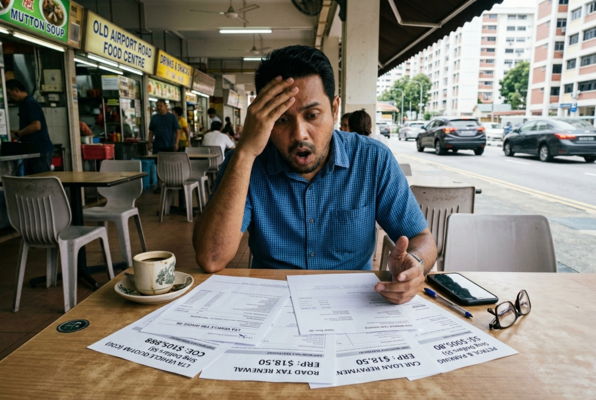
The reduction in PARF rebates lowers the amount recovered at deregistration, which increases the effective cost of vehicle ownership.
Because PARF rebates are embedded in depreciation calculations, a smaller rebate directly increases annual ownership cost. This effect is more significant for vehicles with higher ARF, particularly ICE and hybrid cars.
Lower rebates also reduce resale value and weaken the financial incentive to replace vehicles early. As a result, ownership strategies must shift to account for reduced recovery at the end of the vehicle lifecycle.
Example of PARF rebate impact
The table below illustrates how the revised PARF structure reduces the actual rebate received for a vehicle deregistered between five and six years:
| Component | Existing PARF structure | Revised PARF structure |
| Open Market Value (OMV) | $100,000 | $100,000 |
| ARF paid | $200,000 | $200,000 |
| Rebate rate | 70% of ARF | 25% of ARF |
| Calculated rebate | $140,000 | $50,000 |
| PARF rebate cap | $60,000 | $30,000 |
| Actual rebate received | $60,000 | $30,000 |
| Net difference | — | $30,000 lower |
Source: Land Transport Authority
This example shows that both the reduced percentage and lower cap significantly decrease the final payout, increasing overall ownership cost.
Read more: Owning vs Renting a Car in Singapore: A Cost Breakdown
What are the effects of PARF changes?

Industry analysis indicates that the revised PARF structure will influence both ownership behaviour and vehicle preferences in Singapore.
Lower PARF rebates reduce the financial benefit of early deregistration. As a result:
- More car owners are expected to keep their vehicles for the full 10-year COE.
- COE renewals are likely to increase, especially for cars that remain roadworthy.
This reduces the supply of COEs returning to the market, which may contribute to firmer COE prices.
The PARF changes further strengthen the relative position of EVs.
- ICE and hybrid vehicles face higher effective ownership costs due to reduced rebate recovery.
- EVs remain supported by existing incentives such as EEAI and VES.
- Lower ARF exposure means EVs are less affected in absolute terms.
This shifts the cost comparison in favour of EVs, reinforcing Singapore’s transition towards cleaner vehicles.
Read more: Owning a Car in Singapore: What You Should Know and Consider
What should drivers do now after the PARF rebate cut?
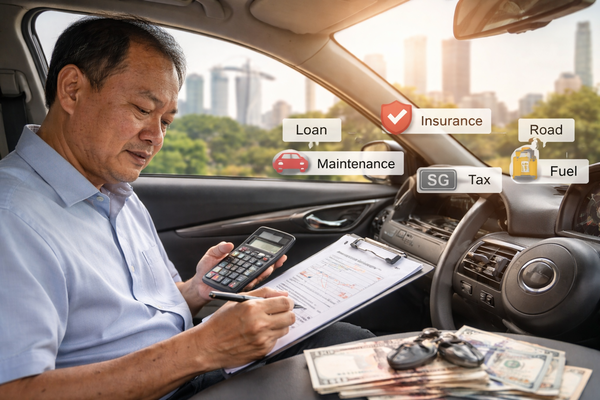
The revised PARF structure requires drivers to actively reassess ownership costs, financing exposure, and replacement timing. The following actions provide a clear framework.
1. Recalculate total cost of ownership
Drivers should update their depreciation using the revised PARF structure, as lower rebates reduce the amount recovered at deregistration.
How to do this:
- Identify your total car cost (purchase price or loan amount)
- Estimate your new PARF rebate based on:
- Deregistration age
- New rebate percentage
- S$30,000 cap
- Add any remaining COE value
- Calculate: Annual Depreciation = (Total Cost – Residual Value) ÷ Years
This updated figure reflects the true annual cost of ownership under the new policy.
2. Reassess vehicle purchase decisions
New buyers should evaluate ICE, hybrid, and EV options based on full lifecycle cost rather than upfront price alone.
3. Evaluate loan exposure
Lower insurance payouts may not cover outstanding loans. Drivers should assess whether additional protection is required.
How to do this:
- Check your remaining loan balance
- Estimate your car’s current market value (with lower PARF)
- Compare: If Loan > Car Value — potential shortfall risk
Is this mandatory?
- Not mandatory for all drivers.
- Critical if you have an outstanding loan, especially for newer vehicles.
4. Optimise ownership duration
The reduced PARF rebate weakens the financial benefit of early deregistration.
How to approach this:
- Compare:
- Value from early deregistration (new PARF).
- Cost of keeping the car longer (maintenance + depreciation).
- General shift:
- Early replacement is less attractive.
- Holding the car closer to the 10-year COE mark may be more cost-efficient.
5. Compare market options
Regular comparison across insurers and vehicle options ensures more competitive outcomes as the market adjusts.
For cars:
- ICE vs hybrid vs EV total cost
- Depreciation under new PARF
- Resale value expectations
For insurance:
- Premiums across insurers
- Valuation methods (especially for EVs)
- Coverage vs payout assumptions
Regular comparison ensures drivers are not locked into outdated pricing or assumptions.
Read more: Best Motor Insurance Plans in Singapore
Frequently asked questions

How much has the PARF rebate been reduced?
The rebate percentages have been reduced by 45%, and the cap has been lowered from S$60,000 to S$30,000.
When do the new PARF rules apply?
They apply to vehicles registered from the second COE bidding exercise in February 2026 onwards.
Will existing car owners be affected?
No. Vehicles registered before the change retain the previous PARF structure.
How does this affect insurance payouts?
In the event of a total loss, your motor insurance will only pay out the market value of the vehicle at the time of the accident or the agreed value, if your policy specifies one.
The payout does not include the unused COE or PARF value. However, these are not lost. You can still recover them separately by deregistering the vehicle with LTA:
- COE rebate: You’ll receive a pro-rated refund of the unused COE.
- PARF rebate: If the car is eligible (typically under 10 years old), you’ll receive the applicable PARF rebate.
In short, your total recovery comes from two sources:
- Insurance payout (vehicle value)
- LTA rebates (COE + PARF, if applicable)
Are EVs affected in the same way?
EVs are affected but to a lesser extent due to lower ARF and additional incentives.
Conclusion
Drivers should act early to adapt to the revised PARF framework by updating financial assumptions, reviewing insurance coverage, and reassessing vehicle choices. Evaluating total cost of ownership, ensuring adequate insurance protection, and considering EV alternatives will position drivers to manage rising costs more effectively under Singapore’s evolving transport policies.
Read more: How Much Does It Cost To Own an Electric Vehicle in Singapore?