

A mid career switch can take an established professional into a different industry, occupation or role without wiping out the value of past experience. The move may involve retraining, a temporary pay cut or even a more junior position, so transferable skills, financial commitments and available support all matter. A realistic plan can help you decide whether to switch now, prepare for a later move or keep developing in your current career.
Career decisions change as your experience, responsibilities and priorities develop. Fresh graduates may be focused on building skills and networks, while young professionals are more likely to be strengthening their expertise and increasing their earning potential.
A mid career switch comes with a different set of trade-offs. By this stage, you may have years of specialised experience alongside financial responsibilities such as children or elderly dependants. Looking at what matters at each working stage can help you make a career change without overlooking the skills, finances and support systems involved.
Fresh graduates and building career foundations
At the start of a career, the priority is usually to build experience, practical skills and professional networks. Holding out too long for a first job that meets every preference can carry an opportunity cost because that time could otherwise be spent gaining experience and making connections.
Internships and less-than-perfect first roles can still build useful skills and give you a clearer sense of the work you enjoy. It also helps to develop core skills, take on additional responsibilities, find mentors and build connections through industry events or professional networks.
The aim at this stage is not to lock yourself into one career path. It is to build enough experience and exposure to give yourself more options later.
Young professionals and building career growth
A few years into working life, you are likely to have built some experience, relevant skills and a growing professional network. You may choose to stay with the same employer and work towards promotions, or move between companies for better prospects in a similar role or industry.
This is a useful stage to deepen your expertise while strengthening communication, teamwork and adaptability. Taking the lead on projects can add weight to your resume, while mentors and professional contacts can expose you to opportunities that may not appear through a standard job search.
These steps can increase your value in your current field while keeping more options open if you decide on a career change later.
Mid career switch decisions at the crossroads
A professional at the mid career stage may have spent around 10 years in a similar industry or role. This can be the point where burnout, changing priorities or new opportunities prompt a move into a substantially different industry, occupation or role.
The motivation for a switch can vary. Some professionals may want better compensation or more meaningful work, while others may be seeking greater job satisfaction or adapting to changes in the job market.
Technology, healthcare and digital marketing are among the future-focused industries identified for professionals considering a different direction. These sectors may also offer roles that draw on skills already developed in another field.
Mid career switch Singapore planning considerations
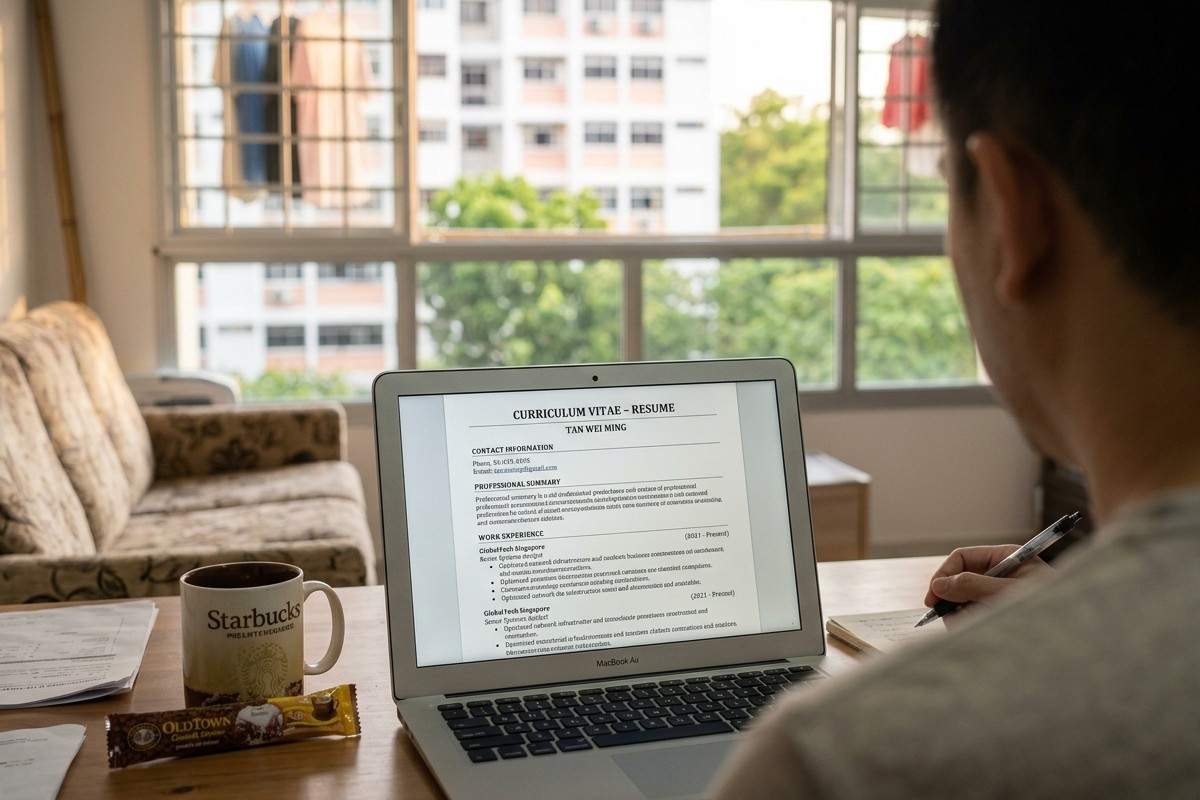
Mid career professionals usually have more experience to draw on than fresh graduates, but they may also have greater financial and family responsibilities. Planning should therefore cover both employability and the practical cost of making the transition.
Before committing to a new role or industry, work through the following areas:
- Clarify your motivation: Identify why you want to change jobs, roles or industries. This can help you separate a long-term career decision from a reaction to a temporary problem such as a difficult project or demanding new boss.
- Identify transferable skills: Assess the technical and soft skills you already have and consider how they apply to other roles. Leadership and problem-solving skills can remain valuable when you move between industries.
- Research new industries: Use career platforms to understand the industries you are considering and the demand for entry-level or mid-level professionals. CareerKaki, GovTech’s AI-powered coach, provides personalised job listings and career resources.
- Close skill gaps: Identify the knowledge or certifications required in your target field and use courses, workshops or further education to build the relevant expertise.
- Reframe your resume: Tailor your CV around capabilities that apply to the target industry. Include relevant soft skills from previous employment and certifications that support the new role.
A career change at this stage can have financial consequences that are less significant for someone earlier in their working life. Retraining may need to happen after work, a new role may initially pay less or the transition may require entering at a lower level.
A financial buffer can help you support yourself and your dependants during the transition. It is also worth including family members or other people who depend on your income in the discussion where relevant.
Read more: Smart Ways to Financially Plan for a Midlife Career Change
SkillsFuture mid career support for retraining
Singapore offers several programmes that can help with the cost of retraining, income support and the move into a different role. The type of support available depends on factors such as your age, course, employment situation and the type of career transition you are making.
| Scheme | Who it is for | What it provides |
| SkillsFuture Credit | Singapore Citizens aged 25 and above | An opening SkillsFuture Credit of S$500 that does not expire. Singapore Citizens also receive an additional S$4,000 SkillsFuture Credit (Mid-Career) upon turning 40 for selected longer-form, employment-focused programmes. |
| SkillsFuture Mid-Career Enhanced Subsidy (MCES) | Singapore Citizens aged 40 and above who qualify for the relevant base subsidy | The mid career enhanced subsidy covers up to 90% of course fees for SSG-supported courses, compared with up to 70% for those under 40. It also covers at least 90% of programme costs for eligible MOE-subsidised courses from Nitec to postgraduate level. |
| SkillsFuture Career Transition Programme (SCTP) | Singaporeans and PRs aged 21 and above | Full-time or part-time training that typically runs for three to 12 months. Programmes include industry-relevant training, career advisory and employment facilitation. |
| SkillsFuture Mid-Career Training Allowance | Mid career Singapore Citizens aged 40 and above taking selected long-form training | For full-time training, the allowance pays 50% of average monthly income over the latest 12 months, with a minimum of S$300 and a cap of S$3,000 per month. From 1 March 2026, selected part-time training is supported at S$300 per month, with up to 24 months of allowance available over a lifetime across both formats. |
| Career Conversion Programme (CCP) | Singapore Citizens and PRs aged 21 and above moving into a substantially different role | Salary support for employers that reskill eligible mid career hires through structured on-the-job training. Standard support is up to 70% of monthly salary during training, capped at S$4,000 per month, while eligible mature workers or long-term unemployed workers can receive enhanced support of up to 90%, capped at S$6,000 per month. |
These schemes serve different purposes. SkillsFuture credits and subsidies reduce training costs, the Mid-Career Training Allowance helps replace some income during eligible training, and the Career Conversion Programme supports employers that hire and reskill workers moving into substantially different roles.
Read more: How To Use Your SkillsFuture Credits To Upskill
Senior workers and career longevity
Later in a career, employability often depends on how well experience is combined with adaptability. Years of knowledge remain valuable, but employers may also want to see that an experienced worker can keep learning as roles and technologies change.
Keeping up with relevant technology and new skills can help maintain that adaptability. Senior workers can also draw more heavily on their experience by moving into specialist, advisory, leadership, mentoring or coaching roles where accumulated knowledge becomes an advantage.
This approach allows experienced workers to build on what they already know rather than treating later-career development as starting over.
Read more: How to Upskill Without Quitting Your Job in Singapore
Tips for a career change at any working stage
Changing jobs or careers can open up new opportunities, but it also brings practical and financial risks. Before resigning, compare your current position with what you want from your next role and decide where you are willing to compromise.
A structured comparison should cover these areas:
- Evaluate your current position: Review your existing compensation, including salary, paid leave, annual bonuses and other benefits. This gives you a clearer basis for comparing a new offer.
- Know your non-negotiables: Identify the conditions you are not prepared to compromise on, such as childcare leave or a five-day work week. Separate these from preferences where you have more flexibility.
- Identify your skill sets: Review the technical and soft skills you can bring to another role. Identify any remaining gaps and upskill where needed to improve your employability.
If you are comparing mid career switch jobs Singapore employers advertise, MyCareersFuture and JobStreet can help you explore mid career roles and career-switcher-friendly employers. Looking at available roles before leaving your current job can give you a better sense of demand and the skills employers are seeking.
A successful career move does not have to mean starting over. What matters is having a clear reason for moving, understanding which skills you can carry forward and being realistic about the financial and professional adjustments involved. Whether you make a mid career switch now or stay in your current field, continuing to build relevant skills can keep more options open as your working life changes.
Read more: Job Hopping: Does it Hurt or Help Your Career?
Frequently asked questions
What support is available for a mid career switch in Singapore?
Singapore Citizens may be eligible for SkillsFuture Credit, the SkillsFuture Mid-Career Enhanced Subsidy, the SkillsFuture Career Transition Programme and the SkillsFuture Mid-Career Training Allowance. Career Conversion Programmes can also provide salary support to employers that hire and reskill eligible workers.
What is the SkillsFuture Mid-Career Enhanced Subsidy?
The mid career enhanced subsidy allows eligible Singapore Citizens aged 40 and above to receive enhanced subsidies for supported courses. It can cover up to 90% of course fees for SSG-supported courses, subject to the applicable base subsidy and eligibility requirements.
Can I receive financial support while retraining for a career change?
Eligible Singapore Citizens aged 40 and above may receive the SkillsFuture Mid-Career Training Allowance for selected long-form training. Full-time training support is based on previous income, while selected part-time training is supported at a flat S$300 per month from 1 March 2026.
Can SkillsFuture Credit be used for a mid career switch?
Singapore Citizens aged 25 and above receive an opening SkillsFuture Credit of S$500. Those aged 40 and above also receive an additional S$4,000 SkillsFuture Credit (Mid-Career) for selected longer-form, employment-focused programmes.
Where can I look for mid career switch jobs in Singapore?
MyCareersFuture and JobStreet can help you explore mid career switch jobs Singapore employers advertise. Comparing job requirements with your transferable skills and training needs can help you assess whether a role is a realistic next step.