
The Enhanced CPF Housing Grant, or EHG, is an HDB housing subsidy for eligible first-timer flat buyers in Singapore. Eligible families can receive up to S$120,000 towards a flat purchase. First-time flat buyers can receive the largest individual housing subsidy available and combine it with other housing grants in Singapore if they meet the relevant conditions.
Eligible resale buyers can combine the EHG with the CPF Housing Grant, also known as the Family Grant, and the Proximity Housing Grant. Total grants can reach S$230,000 for a narrow group of households earning below S$9,000 per month, buying a four-room or smaller resale flat, living near family, and purchasing a flat with sufficient remaining lease.
Grant amounts also vary across the different types of HDB flats available. Whether a household chooses a Standard, Plus, or Prime BTO flat, or a resale unit, income, remaining lease and proximity to family can affect grant entitlement, CPF usage limits and loan eligibility.
Key takeaways
- The EHG can provide eligible first-timer families with up to S$120,000 towards their HDB flat.
- Household income, first-timer status, flat type and remaining lease can affect how much grant support a buyer receives.
- Eligible first-timer families buying a resale flat may receive up to S$230,000 in combined housing grants.
- The lease-to-95 rule can reduce the EHG and CPF usage if an older resale flat does not have enough remaining lease.
- HDB credits the grants to the buyer’s CPF Ordinary Account. When the buyer sells the property, they must generally refund the grant amount and accrued interest to CPF.
How the enhanced CPF housing grant works with other HDB housing grants
HDB housing grants are credited to the applicant’s CPF Ordinary Account rather than paid in cash. Once credited, the amount earns CPF OA interest at 2.5% per year. When the owner sells the property, they must generally refund the original grant and accrued interest to CPF. For example, an S$80,000 grant held for 20 years grows to approximately S$131,000, which the seller must return to CPF upon sale.
First-timer status also determines which grants a household can access. If either applicant has previously received a housing subsidy, CPF Housing Grant, HDB concessionary purchase, or a similar housing subsidy, HDB may classify the household as a second-timer for certain grants. Divorce, remarriage, and the disposal of private property can also affect this status, so applicants should confirm their eligibility with HDB before applying.
Household income is assessed using the average gross monthly income over the 12 months before the application date. Buyers cannot exclude months with unusually high earnings from this assessment period. Self-employed applicants must provide their Notice of Assessment from IRAS.
HDB assesses income at the point of application rather than at key collection. A later pay rise therefore does not reduce a grant that the applicant has already secured.
The lease-to-95 rule and why grants are reduced
The lease-to-95 rule links the remaining lease of a flat to the age of the youngest buyer or spouse. If the remaining lease does not cover the youngest buyer or spouse until age 95, HDB may reduce the amount of CPF savings that the household can use and the EHG it can receive.
HDB calculates the pro-ration factor by dividing the remaining lease by the lease required for the youngest buyer or spouse to reach age 95.
Consider a couple aged 30 buying a resale flat with 45 years of lease remaining.
| Factor | Detail |
| Buyer age | 30 years |
| Remaining lease | 45 years |
| Lease needed to reach age 95 | 65 years |
| Pro-ration factor | 45 ÷ 65 = approximately 69% |
| Full EHG entitlement | S$120,000 |
| Pro-rated EHG received | Approx. S$83,000 |
| Grant reduction | Approx. S$37,000 |
| Estimated total cash shortfall* | Can exceed S$100,000 |
*Includes the impact of a reduced CPF usage cap and smaller approved loan quantum. An older flat can therefore affect more than the grant alone. A shorter remaining lease can reduce the EHG, limit CPF usage and affect the loan amount, increasing the amount of cash needed for the purchase.
Sources: CPF housing grant for families, CPF usage for home ownership
Buyers relying on a CPF housing grant for resale flat purchase should treat the remaining lease as a key filter before comparing asking prices. Many attractive flats in mature estates date from the 1970s and have fewer than 55 years remaining on their leases as of 2026. Lease calculations are particularly important before shortlisting these flats.
Pro-tip: Before viewing an older resale flat, check when it was built and calculate its remaining lease. CPF Board’s online calculators can help you estimate how much CPF you can use and whether HDB will pro-rate the grant.
Read more: How To Choose the Perfect HDB Resale Flat in Singapore
HDB housing grants by buyer situation and type of flat
Grant eligibility differs by buyer profile, household income and flat type.
HDB housing grants for first-timer buyers
First-timer families and singles have different EHG income limits and grant amounts. Resale buyers may also qualify for the Family Grant and Proximity Housing Grant.
| Buyer profile | Standard BTO | Plus BTO | Prime BTO | Resale HDB |
| With income of S$9,000 or below | EHG up to S$120,000 | EHG up to S$120,000, with Family Grant and PHG where eligible | ||
| With income of S$9,001 to S$14,000 | EHG not eligible. Flat purchase remains eligible within the S$14,000 income ceiling. | EHG not eligible. Family Grant and PHG may still apply. | ||
| With income of S$4,500 or below | EHG up to S$60,000 for a 2-room Flexi flat only | EHG up to S$60,000 for a 2-room Flexi flat only. Verify availability with HDB. | EHG up to S$60,000, with applicable Family Grant and PHG | |
For first-timer families buying a resale flat, the Family Grant is up to S$80,000 for a four-room or smaller flat and S$50,000 for a five-room or larger flat. The PHG is S$30,000 when living with family or S$20,000 when living within 4km, with no income ceiling. When all applicable grants are combined, total support can reach S$230,000.
For eligible first-timer singles buying a resale flat, the Family Grant is up to S$40,000 for a four-room or smaller flat and S$25,000 for a five-room or larger flat. Buyers should verify the applicable amount with HDB. The PHG is up to S$10,000 when living within 4km or S$15,000 when living together.
HDB housing grants for other buyer situations
Second-timers, multi-generation families and households applying under non-citizen family schemes have different grant arrangements from first-timer buyers.
| Buyer profile | Standard BTO | Plus or Prime BTO | Resale HDB |
| Second-timer family upgrading | Step-Up CPF Housing Grant of S$15,000 for households earning S$7,000 or below and upgrading from a 2-room or 3-room flat. | Half-Housing Grant where one applicant is a first-timer | |
| Extended or multi-generation family applying under the Multi-Generation Priority Scheme (MGPS) | Priority balloting under MGPS for extended families booking a flat together or nearby. This priority balloting does not raise the EHG income ceiling, the applying household still needs its own income at S$9,000 or below to receive the EHG | Same MGPS priority balloting where offered. Family Grant and PHG follow their own standard eligibility. EHG still requires household income of S$9,000 or below. | Not applicable, MGPS is a BTO balloting priority scheme, not a resale grant. |
| Non-citizen spouse or non-citizen family scheme | Singapore Citizen applicants may qualify for reduced grants. A non-citizen spouse is not eligible for the EHG as a co-applicant. | Family Grant applicable under scheme conditions | |
Buyers should verify current grant amounts and eligibility conditions directly with HDB before making a purchase decision because the rules and amounts are subject to change.
Buyers earning above S$9,000 per month are not eligible for the EHG but may still qualify for the CPF Housing Grant for resale flat purchases and the Proximity Housing Grant. The Proximity Housing Grant has no income ceiling.
Read more: The Complete Guide to HDB Grants for Couples
Enhanced CPF Housing Grant and CPF housing grant income ceiling
The EHG is tiered according to average gross monthly household income. Lower-income households receive a higher grant, while eligibility ends above the applicable CPF housing grant income ceiling.
For families, the income ceiling for the EHG is S$9,000 per month. For singles, it is S$4,500 per month. A single applicant’s EHG is assessed at half the family grant amount across the income tiers, up to a maximum of S$60,000. Singles with household income above S$4,500 are not eligible.
EHG for families (first-timer households)
| Average gross monthly household income | EHG for families |
| $1,500 or less | $120,000 |
| $1,501 to $2,000 | $110,000 |
| $2,001 to $2,500 | $105,000 |
| $2,501 to $3,000 | $95,000 |
| $3,001 to $3,500 | $90,000 |
| $3,501 to $4,000 | $80,000 |
| $4,001 to $4,500 | $70,000 |
| $4,501 to $5,000 | $65,000 |
| $5,001 to $5,500 | $55,000 |
| $5,501 to $6,000 | $50,000 |
| $6,001 to $6,500 | $40,000 |
| $6,501 to $7,000 | $30,000 |
| $7,001 to $7,500 | $25,000 |
| $7,501 to $8,000 | $20,000 |
| $8,001 to $8,500 | $10,000 |
| $8,501 to $9,000 | $5,000 |
| Above $9,000 | Not eligible |
For single applicants / single child aged 35 or above buying with parents. Grant is based on the single’s own average monthly income.
| Half of the average monthly household income | EHG for families |
| Not more than $750 | $60,000 |
| $751 – $1,000 | $55,000 |
| $1,000 – $1,250 | $52,500 |
| $1,251 – $1,500 | $47,500 |
| $1,501 – $1,750 | $45,000 |
| $1,751 – $2,000 | $40,000 |
| $2,001 – $2,250 | $35,000 |
| $2,251 – $2,500 | $32,500 |
| $2,501 – $2,750 | $27,500 |
| $2,751 – $3,000 | $25,000 |
| $3,001 – $3,250 | $20,000 |
| $3,251 – $3,500 | $15,000 |
| $3,501 – $3,750 | $12,500 |
| $3,751 – $4,000 | $10,000 |
| $4,001 – $4,250 | $5,000 |
| $4,251 – $4,500 | $2,500 |
| Above $4,500 | Not eligible |
A S$500 income difference near a tier boundary can change the grant by S$10,000 or more. A household earning S$4,501 to S$5,000 receives S$65,000 in EHG, while one earning S$5,001 to S$5,500 receives S$55,000. For households close to a tier boundary, the timing of the application can therefore matter. Buyers should check the latest income tiers directly with HDB before applying because HDB reviews these figures periodically.
Standard, plus, and prime flats
Singapore’s BTO flat classification changed in 2024. The previous Mature and Non-Mature estate classification was replaced by Standard, Plus, and Prime categories based on location desirability. The category affects minimum occupation periods, subsidy recovery and resale rules across the different types of HDB flats.
| Feature | Standard | Plus | Prime |
| Location | Standard HDB towns | Better-located estates with higher demand | Centrally located and most sought-after areas |
| Minimum Occupation Period | 5 years | 10 years | |
| Subsidy recovery on resale | None | Yes, a percentage of the resale price or value at purchase, whichever is higher. | Yes, a higher percentage than Plus. |
| Income ceiling for future resale buyers | Standard HDB income ceiling | Income ceiling applies at point of resale | |
| Enhanced CPF Housing Grant | Available, subject to income | ||
Subsidy recovery reduces the net sale proceeds for Plus and Prime buyers. Anyone who may need to sell within ten years should account for both the Minimum Occupation Period and subsidy recovery when comparing the different types of HDB flats available.
The 10-year MOP on Plus and Prime flats is more suitable for households planning to stay for the longer term. Standard BTO flats offer greater flexibility for buyers whose timelines are less certain.
Read more: BTO vs. Resale Flats: Which Is Right for You?
Eligibility traps and disqualifiers
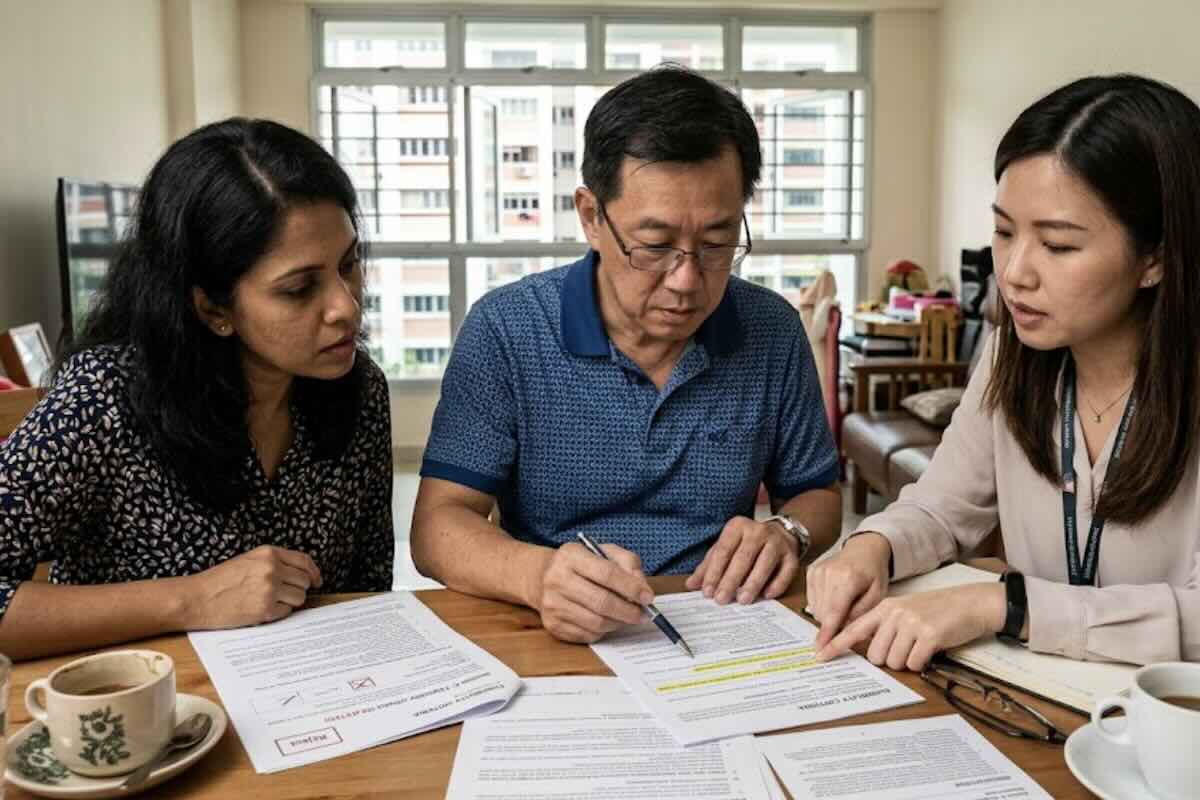
Ownership history, income changes and household arrangements can reduce or eliminate HDB housing grant eligibility. Checking these conditions before applying can help buyers avoid decisions that affect both their current grant entitlement and future housing options.
The following situations can affect grant eligibility:
- Private property and the 30-month rule: Any household member who disposed of a private residential property must generally observe a 30-month wait before becoming eligible for CPF Housing Grants. Applicants must disclose any overseas property ownership when they apply. HDB may treat a failure to disclose such ownership as misrepresentation, which can lead to grant clawback and legal consequences. This is separate from the 15-month wait-out period that HDB removed in July 2026 for buyers purchasing a non-subsidised resale flat without any grant or HDB loan.
- Rising income between application and completion: For BTO flats, income is assessed at the time of application. The application date rather than key collection is therefore the critical point for BTO grant eligibility. If income rises significantly before applying, the applicable grant tier may be lower for that purchase.
- Adding an occupier to qualify: Adding a family member as an occupier to meet eligibility requirements can affect that person’s future housing eligibility. HDB may classify them as second-timers when they later apply for their own flat. Parents and children may overlook this consequence when they add parents to the application to help the child qualify for a larger flat.
- Divorce and remarriage: Following a divorce, each party’s first-timer or second-timer status depends on the history of housing subsidies received during the marriage. A person who received a housing subsidy in a previous marriage does not automatically regain first-timer status upon remarriage. The new couple may be classified as second-timers even if the new spouse has never received a subsidy.
EC housing grant and eligibility for executive condominiums
Executive Condominiums, or ECs, are developed by private developers under an HDB framework. Their grant structure differs from BTO and resale HDB flats, so buyers need to assess EC housing grant eligibility separately.
First-timer families buying an EC may access the CPF Housing Grant, also known as the Family Grant for ECs, worth up to S$30,000 for eligible first-timer families. This is separate from and lower than the resale Family Grant of up to S$80,000, which does not apply to ECs.
The income ceiling for EC buyers is S$16,000 per month. This is higher than the S$14,000 ceiling for standard HDB flat purchases.
Buyers cannot use the Enhanced CPF Housing Grant for ECs because private developers develop and sell ECs. After the five-year MOP, ECs can be sold to Singapore Citizens and Permanent Residents. After ten years, ECs are fully privatised and may be sold on the open market to any buyer.
Conclusion
Housing grants in Singapore can reduce the upfront cost of buying a home, but the maximum headline amount does not apply to every buyer. The S$230,000 available to eligible resale flat buyers depends on meeting the conditions for the EHG, CPF Housing Grant and Proximity Housing Grant at the same time.
For most first-timer families, the Enhanced CPF Housing Grant is the largest individual grant to assess. Checking household income, first-timer status, flat type and remaining lease before committing to a flat gives buyers a more realistic view of both their grant entitlement and the amount they still need to fund.
Read more: How CPF and HDB Grants Help Newlyweds Buy Their First Home
Frequently asked questions
What is the maximum HDB housing grant available in Singapore?
First-timer couples buying a resale flat can receive up to S$230,000 in combined HDB housing grants, according to Made For Families. This total comprises the EHG, the CPF Housing Grant (Family Grant), and the Proximity Housing Grant. Only households that meet all three grants’ conditions simultaneously will reach this maximum.
Are housing grants paid in cash?
No. Housing grants in Singapore are generally credited to the CPF Ordinary Account, not paid as cash. The grant principal and all accrued interest at 2.5% per year must be refunded to CPF when the property is sold.
What is the lease-to-95 rule?
The lease-to-95 rule means CPF usage and the EHG may be pro-rated if the remaining lease does not cover the youngest buyer or spouse until age 95. The pro-ration is the remaining lease divided by the lease required to reach age 95. This can significantly increase the cash required to buy an older resale flat.
What is the difference between Standard, Plus, and Prime BTO flats?
Understanding BTO grant eligibility starts with the flat type. Standard BTO flats carry a five-year MOP with no subsidy recovery. Plus and Prime flats carry a ten-year MOP and are subject to a subsidy clawback on resale. Plus and Prime flats are located in more desirable areas but carry more restrictive resale conditions.
Can singles receive the Enhanced CPF Housing Grant?
Yes. First-timer singles can receive the EHG at half the family amount, up to S$60,000, subject to the CPF housing grant income ceiling of S$4,500 per month for singles. The income tiers follow the same structure as for families but at half the grant quantum at each band.
Do grants apply to Executive Condominiums?
The EC housing grant, the CPF Housing Grant (Family Grant), applies to EC purchases subject to eligibility. The EHG does not apply to ECs because they are developed by private developers. The income ceiling for EC buyers is S$16,000 per month, compared to S$14,000 for standard HDB flat purchases.