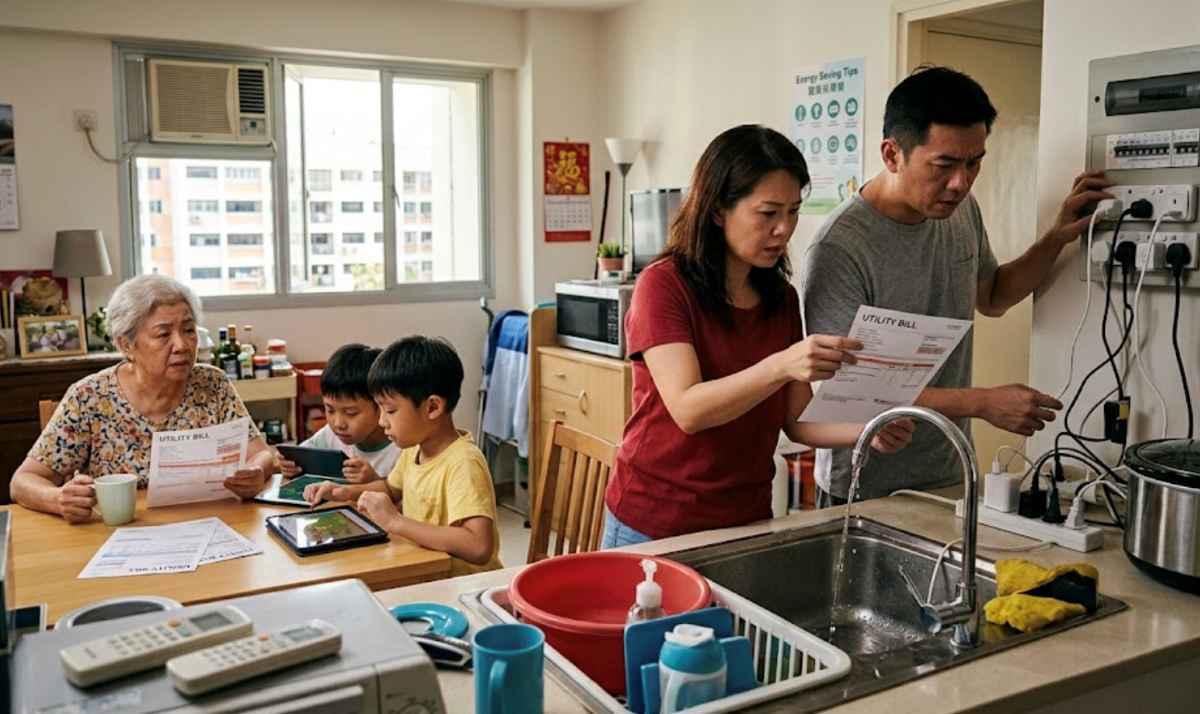

Buying your first home in Singapore involves more than renovation, furniture, mortgage repayments, and insurance. Utility costs refer to recurring household expenses such as electricity, water, gas, refuse-related charges, waterborne fees, sanitary appliance fees, and GST.
These expenses form an ongoing part of homeownership costs and affect monthly cash flow. How much a household pays depends on home type, appliance efficiency, cooling habits, electricity plans, water consumption, and maintenance routines.
Many utility costs remain within a homeowner’s control. Better decisions during renovation, appliance selection, and daily home use can reduce avoidable expenses and support a more sustainable household budget.
This guide explains the most common utility mistakes Singapore homeowners make, why they matter, and how to avoid them.
Key takeaways
- Utility bills are a recurring component of homeownership and should form part of every household budget.
- Electricity is typically the largest variable utility expense, particularly for households that use air-conditioning frequently.
- Appliance efficiency, electricity plan selection, water fittings, maintenance practices, and daily habits influence utility costs for years.
- Small changes, such as setting air-conditioning at 25°C or higher, fixing leaks, and reducing standby power consumption, can lower long-term expenses.
- Renovation planning and appliance selection have a lasting impact on future electricity and water usage.
Why utility bills can be higher than expected in Singapore
Utility bills can be higher than expected because many new homeowners focus on large upfront costs and underestimate recurring household expenses. Renovation, furniture, appliances, deposits, moving costs, and insurance often receive more attention than monthly electricity, water, gas, and related charges.
According to Singapore Ministry of Sustainability and the Environment (MSE) data, households living in 4-room HDB flats consumed an average of 380.7 kWh of electricity and 15.4 m³ of water per month in 2024. This benchmark helps new homeowners estimate recurring utility costs before they move in and compare their own usage after receiving their first bills.
Private apartments and condominiums consumed 522.0 kWh of electricity monthly on average, while landed properties consumed 1,208.2 kWh. These differences show that utility bills vary according to home size, occupancy, appliance usage, and cooling habits.
Lifestyle changes after moving into a new home can also increase consumption through additional cooking, laundry, remote work, and appliance use. Utilities should form part of a complete homeownership budget alongside mortgage repayments, insurance premiums, property tax, conservancy or maintenance fees, repairs, and savings goals.
Buying appliances based only on price
Buying appliances based only on purchase price can increase long-term utility costs. Lower-priced appliances may consume more electricity or water over their lifespan, especially when homeowners use them daily or for long hours.
This mistake matters most for frequently used appliances such as refrigerators, air-conditioners, washing machines, dryers, water heaters, ovens, and induction hobs. A cheaper appliance may cost more over time if it uses more electricity or water each month.
How to avoid this utility mistake
Avoiding this utility mistake means assessing the total cost of owning an appliance, not just its purchase price. Singapore homeowners should compare energy use, water use, appliance capacity, and expected usage frequency before buying.
| Appliance comparison factor | Why it matters |
| Energy efficiency ratings | More efficient appliances typically consume less electricity over time |
| Estimated annual energy consumption | Helps estimate ongoing electricity costs before purchase |
| Water efficiency ratings | Indicates how much water the appliance uses during operation |
| Appliance capacity | Choosing the right size prevents unnecessary energy and water consumption |
| Expected usage frequency | Frequently used appliances benefit more from higher efficiency |
| Estimated lifetime operating costs | Provides a clearer view of total ownership costs beyond the purchase price |
For regulated electrical appliances, review the energy label. For water-related appliances and fittings, review PUB’s Water Efficiency Labelling Scheme. The more frequently an appliance operates, the more valuable efficiency becomes.
Not budgeting for utilities before moving in
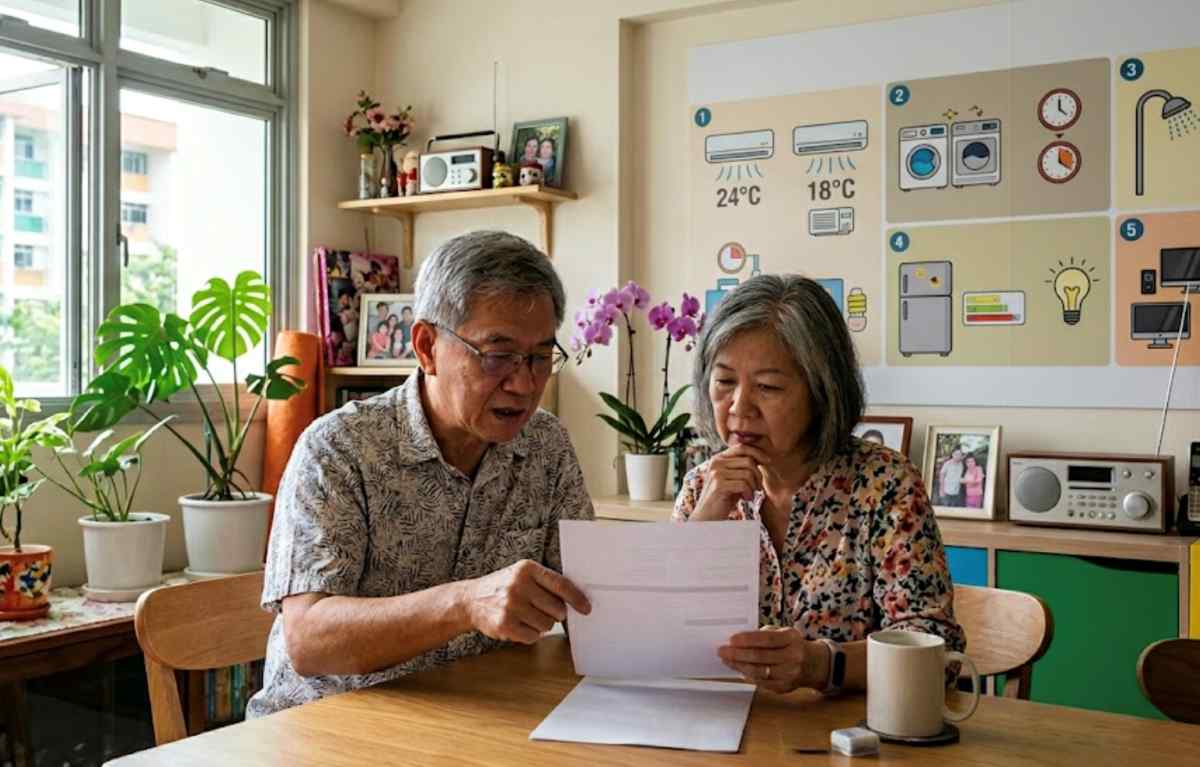
Not budgeting for utilities before moving in can create cash-flow pressure after homeownership begins. Many homeowners prepare renovation budgets but overlook recurring electricity, water, gas, and related charges.
This mistake becomes more costly when utility bills begin at the same time as mortgage repayments, insurance premiums, maintenance fees, and regular household spending.
Utility costs vary based on several household factors. Singapore homeowners should assess these drivers before moving in:
- Home type: Larger homes generally consume more electricity for lighting, cooling, and appliance use.
- Number of occupants: More residents typically increase electricity, water, and gas consumption.
- Air-conditioning usage: Longer operating hours can significantly increase electricity bills.
- Cooking frequency: Frequent cooking may increase electricity or gas usage.
- Electricity plan selection: Different electricity rates can affect overall annual utility costs.
- Water usage habits: Shower duration, laundry practices, and daily water use influence water bills.
After moving in, track your first three utility bills and compare actual usage against your estimates. This helps establish the true monthly cost of operating your home and allows you to adjust your household budget accordingly.
Read more: The Hidden Costs of Owning a Home in Singapore
Choosing the wrong electricity plan
Choosing the wrong electricity plan can increase annual household expenses because different plans use different pricing structures, contract terms, and renewal conditions. Singapore households can buy electricity either through the tariff or through retailers in the Open Electricity Market (OEM), which offer plans with different pricing structures and contract terms.
Under the regulated tariff, electricity prices are set quarterly by SP Group based on the cost of generating and supplying electricity. Retailers in the OEM offer plans with different rates, pricing models, and contract terms.
Choosing a plan based only on promotional rates may result in higher long-term costs if prices increase after the promotional period ends.
| Factor | Why it matters |
| Electricity rates after promotional periods | Introductory discounts may expire, resulting in higher ongoing costs |
| Contract duration | Longer contracts may provide price certainty but reduce flexibility to switch plans |
| Early termination fees | Exiting a contract early can create additional costs if your circumstances change |
| Auto-renewal terms | Some plans automatically renew at different rates when the contract ends |
| Fixed-rate vs tariff-linked pricing | Fixed-rate plans offer price certainty, while tariff-linked plans fluctuate with regulated electricity prices |
| Billing arrangements | Different billing methods may affect convenience and how you track household expenses |
| Suitability for household consumption patterns | The most cost-effective plan depends on your home’s electricity usage and lifestyle habits |
For a household using about 380 kWh of electricity per month, or approximately 4,560 kWh per year, a price difference of one to three cents per kWh can translate into roughly $45 to $137 in annual savings. Small per-kWh price differences can produce measurable annual savings when applied to monthly household electricity consumption.
For example, the SP regulated tariff was 29.11 cents per kWh, including GST, for the January–March 2026 quarter. A household consuming around 380 kWh per month and paying a rate that is 2.11 cents per kWh lower would save approximately $96 per year. This illustrates how electricity plan selection can affect annual household expenses.
Read more: A Beginner’s Guide to the Open Electricity Market (OEM) for Singapore Residents
Overusing air-conditioning
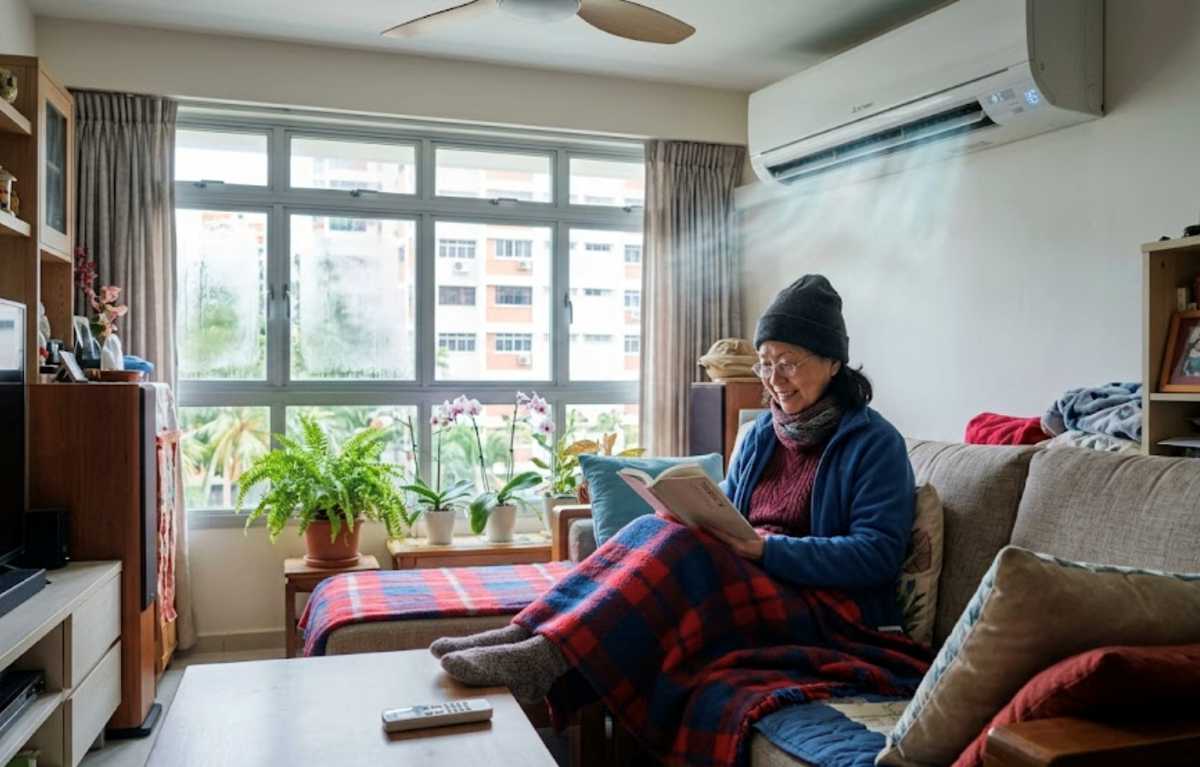
Overusing air-conditioning can significantly increase electricity bills in Singapore homes. Air-conditioning often represents one of the largest contributors to residential electricity use, especially in households that cool rooms for long hours or use low temperature settings.
Common cost-increasing habits include setting temperatures too low, cooling unused rooms, leaving doors open, and delaying maintenance.
Singapore’s Go 25 movement, launched in May 2025 by the SGBC and MSE with support from NEA and BCA, encourages setting air-conditioning at 25°C or higher. A supporting study with Ngee Ann Polytechnic’s Centre for Environmental Sustainability found that raising office air-conditioning from 23°C to 25°C can deliver energy savings of up to 12% for each degree raised, with further savings above 25°C. This matters for homeowners because thermostat settings directly influence electricity consumption.
How to reduce air-conditioning electricity costs
Reducing air-conditioning electricity costs requires better temperature settings, more efficient cooling habits, and regular system maintenance. The following measures can help improve cooling efficiency and reduce energy use:
- Set the thermostat between 25°C and 26°C where comfortable
- Use fans alongside air-conditioning
- Cool occupied rooms only
- Keep doors and windows closed
- Use timer functions overnight
- Clean filters regularly
- Schedule periodic servicing
- Use curtains, blinds, or solar films to reduce heat gain
Renovation choices affect long-term cooling needs because layout, sunlight exposure, air-conditioner placement, and system sizing determine how hard an air-conditioning system must work. Poor planning can increase electricity consumption for years after move-in.
Ignoring water-saving opportunities
Ignoring water-saving opportunities can increase recurring household expenses. Water costs may be lower than electricity costs, but they still form part of monthly utility bills.
According to PUB’s Household Water Consumption Study (2024–2025), showering, flushing, kitchen activities, and laundry account for about 80% of total household water use. This statistic matters because these activities occur daily, so small improvements in water efficiency can produce meaningful long-term savings.
How to reduce water bills in singapore
Reducing water bills in Singapore requires homeowners to manage daily water use and choose efficient fittings during renovation. Household water consumption is largely driven by showering, laundry, flushing, and kitchen use.
The following measures can help reduce water consumption:
- Install water-efficient taps, mixers, shower fittings, and toilets
- Choose WELS-rated washing machines
- Run full laundry loads where practical
- Repair leaks promptly
- Turn off taps when not actively using water
- Consider lower-flow shower fittings
Renovation is often the most cost-effective stage for implementing water-saving upgrades because homeowners can choose efficient fittings before installation.
Leaving standby power unchecked
Leaving standby power unchecked can increase electricity use even when devices are not actively in use. Standby power refers to electricity consumed by devices that remain plugged in while idle.
Examples include televisions, gaming consoles, monitors, chargers, printers, routers, smart home hubs, and computers. These devices may draw small amounts of electricity individually, but the combined effect can accumulate over time.
How to reduce standby electricity usage
Reducing standby electricity usage requires homeowners to identify which devices need continuous power and which devices can be switched off. Standby electricity consumption from televisions, chargers, routers, computers, and smart home devices can accumulate over time.
The following measures can help reduce standby power usage:
- Use switched power strips
- Unplug chargers when not in use
- Switch off monitors, printers, and speakers at the socket
- Review which smart home devices require continuous power
- Limit always-on devices to essential equipment
Read more: How To Cut Down on Electricity Bills and Save Money
Delaying preventive maintenance
Delaying preventive maintenance can increase electricity and water consumption. Preventive maintenance supports household efficiency because appliances and fittings operate more effectively when they remain clean, sealed, and free from leaks or blockages.
Dirty filters, leaking fixtures, blocked components, and damaged seals can increase electricity and water consumption over time.
Home maintenance tasks that can lower utility costs
Home maintenance tasks can lower utility costs by improving the efficiency of systems that homeowners use regularly. Air-conditioners, refrigerators, taps, toilet cisterns, and water heaters require periodic maintenance to operate efficiently.
The following maintenance tasks can help reduce utility costs:
- Clean air-conditioner filters regularly
- Schedule periodic air-conditioner servicing
- Check refrigerator door seals
- Inspect taps, showerheads, and toilet cisterns for leaks
- Descale shower fittings where necessary
- Use timers for storage water heaters where appropriate
How much could utility mistakes cost each year?
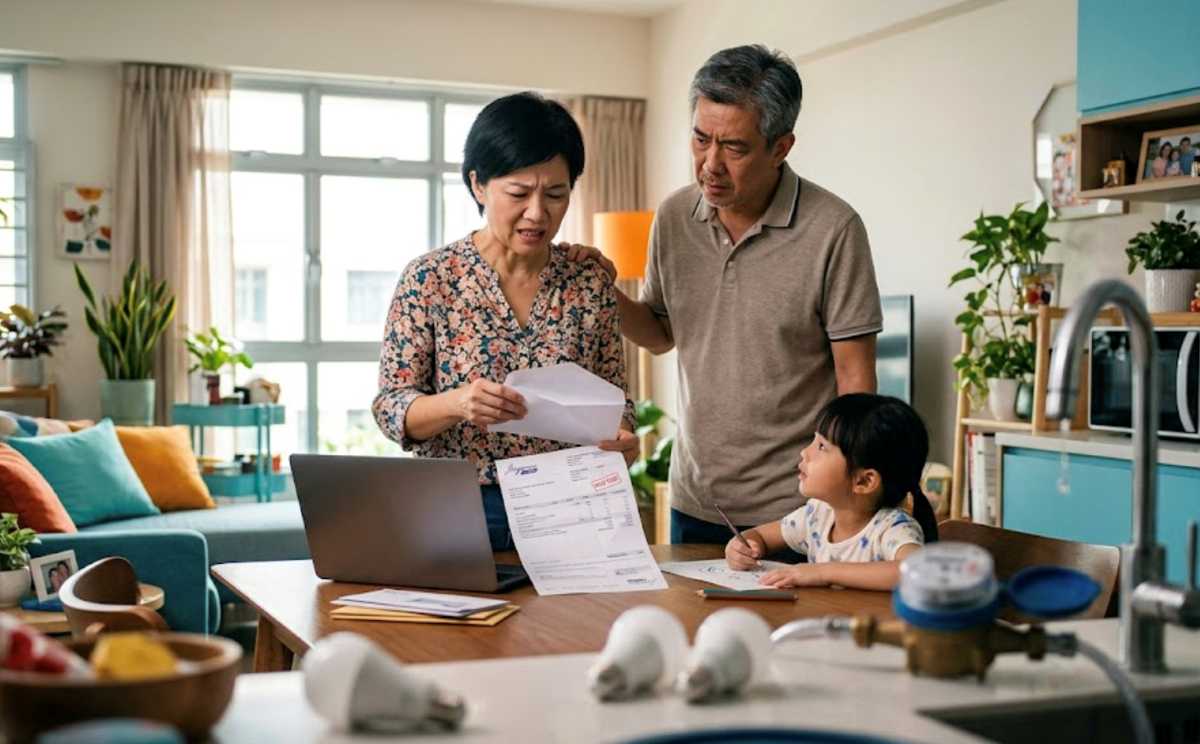
The annual cost of utility mistakes depends on home size, occupancy, appliance efficiency, cooling habits, electricity plans, water usage, and maintenance practices. These factors interact because each one affects either the amount of energy or water consumed, or the rate paid for that consumption.
Using a 4-room HDB household as a benchmark, average electricity consumption is roughly 380 kWh per month. At the Q2 2026 regulated tariff of 29.72 cents per kWh, including GST, that works out to about $113 per month for electricity alone, before water, gas, and other utility charges.
| Utility mistake | Estimated annual savings | Impact summary |
| Choosing less efficient appliances | $120–$350 | Higher lifetime electricity and water consumption due to lower efficiency ratings |
| Using an unsuitable electricity plan | $45–$135 | Higher per-kWh rates or poor contract terms increase annual electricity costs |
| Inefficient air-conditioning usage | $150–$500 | Excess cooling from low temperature settings, poor habits, and inadequate maintenance |
| Ignoring water-saving opportunities | $40–$120 | Higher water bills from inefficient fixtures, long showers, and laundry waste |
| Leaving standby power unchecked | $25–$150 | Continuous phantom load from plugged-in devices increases electricity usage |
| Delaying preventive maintenance | $80–$250 | Reduced appliance efficiency and avoidable energy or water wastage over time |
Note: The following figures are indicative estimates derived from Singapore household utility benchmarks and national energy and water efficiency guidance. Actual savings vary depending on household size, usage behaviour, and appliance efficiency.
Utility budgeting checklist for new homeowners
A utility budgeting checklist helps new homeowners identify cost-saving opportunities before renovation, during move-in, and throughout long-term homeownership. This checklist connects appliance choices, renovation decisions, and daily habits to recurring electricity and water costs.
Before buying appliances
Before buying appliances, Singapore homeowners should compare appliance efficiency, capacity, and expected usage because these factors affect long-term electricity and water costs.
- Compare energy efficiency ratings
- Review annual energy consumption estimates
- Choose appropriately sized appliances
- Avoid oversized air-conditioners and water heaters
- Select WELS-rated products where available
- Check eligibility for Climate Vouchers and support schemes
- Estimate the impact of major appliances on monthly bills
During renovation
During renovation, Singapore homeowners should plan layouts, fittings, and cooling systems with future utility usage in mind. Renovation decisions can affect electricity and water consumption for many years after move-in.
- Plan air-conditioner placement carefully
- Consider sunlight exposure and heat gain
- Install curtains, blinds, or solar films
- Install accessible power switches
- Use LED lighting
- Choose water-efficient fittings
- Avoid layouts that require cooling unused spaces
- Maintain easy servicing access
After moving in
After moving in, Singapore homeowners should monitor actual utility usage and adjust household habits based on their first bills. Actual consumption data helps homeowners refine their monthly budget.
- Track your first three utility bills
- Compare actual usage against your budget
- Review your electricity plan
- Set air-conditioning at 25°C or higher where comfortable
- Use fans alongside air-conditioning
- Switch appliances off at the socket
- Run full laundry loads where practical
- Fix leaks immediately
- Clean air-conditioner filters regularly
- Schedule preventive servicing
Every year
Every year, Singapore homeowners should review utility contracts, appliance performance, and household habits. Annual reviews help prevent small inefficiencies from becoming recurring expenses.
- Review electricity contracts before renewal
- Reassess your utility budget
- Check appliance performance
- Inspect water fittings for leaks
- Adjust habits when household circumstances change
- Review total homeownership costs
Conclusion
Utility costs are an important component of homeownership in Singapore. Focusing only on renovation and appliance purchase costs can lead to higher long-term expenses.
Inefficient appliances, unsuitable electricity plans, excessive air-conditioning use, water waste, standby power consumption, and delayed maintenance can collectively cost households hundreds of dollars each year.
Renovation planning, appliance selection, and electricity plan comparisons influence future utility expenses. After moving in, homeowners can improve efficiency by monitoring bills, repairing leaks, maintaining appliances, and reducing unnecessary electricity consumption.
A financially sustainable home is comfortable, affordable to operate, straightforward to maintain, and aligned with long-term financial goals.
Frequently asked questions
What do utility bills include for Singapore homeowners?
Utility bills typically include electricity, water, gas, refuse-related charges, waterborne fees, sanitary appliance fees, and GST, all of which are recurring household expenses.
What factors influence a household’s utility costs?
Costs depend on factors such as home type, number of occupants, appliance efficiency, air-conditioning usage, water habits, and the chosen electricity plan.
What is usually the biggest utility expense in Singapore homes?
Electricity is typically the largest variable utility cost, with air-conditioning use being one of the main drivers of higher bills.
How can homeowners reduce utility costs easily?
Common ways include using energy-efficient appliances, setting air-conditioning to 25°C or higher, fixing leaks, reducing standby power, and choosing suitable electricity plans.
When should utility budgeting start for new homeowners?
Utility budgeting should start before moving in, alongside renovation and mortgage planning, so homeowners can better manage ongoing monthly expenses.