

As a young adult, retirement may feel distant, something that happens neatly at a fixed age after decades of full-time work. The traditional narrative is simple: Work until your mid-60s, retire, and stop working altogether.
In reality, retirement is becoming far less linear. Many older adults now return to work after retiring, either by choice or necessity. This growing phenomenon, known as unretirement, carries important lessons for young adults when it comes to career planning and long-term financial decisions.
What is unretirement?
Unretirement refers to returning to work after retiring, or continuing to work beyond the traditional retirement age. This work rarely looks like a conventional full-time role. Instead, it often takes more flexible forms, such as part-time employment, consulting, freelance work, or short-term contracts.
This shift reflects a broader reality: retirement is no longer a fixed endpoint. Longer life expectancy, changing workplace norms, and evolving financial needs mean many people now experience retirement as a transition rather than a permanent exit from the workforce.
In Singapore, policies such as re-employment beyond the statutory retirement age and initiatives like SkillsFuture support this trend, making it easier for older adults to remain economically active.
How unretirement looks in practice
Unretirement does not follow a single path. It shows up in different ways, each with distinct implications for financial planning.
Example 1: Career pivot

Some retirees return to work in a field different from their original career. For example, someone who spent decades in a corporate role may move into teaching, mentoring, or advisory work.
What this means for financial planning:
- Income may be lower but more flexible.
- Transferable skills continue to generate value.
- Retirement savings may support a partial income phase rather than full replacement.
This scenario highlights the importance of building adaptable skills and professional networks earlier in life.
Read more: Smart Ways To Financially Plan for a Midlife Career Change
Example 2: Phased retirement
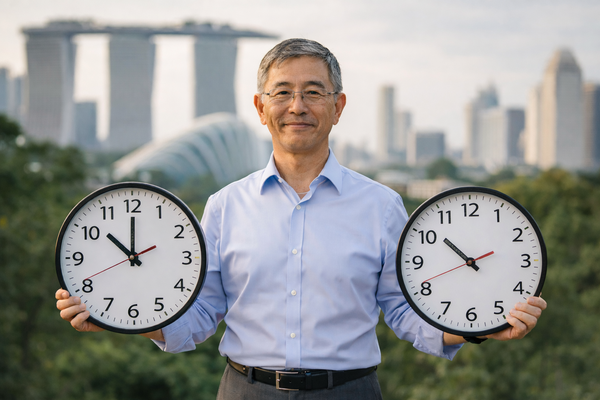
In a phased retirement model, individuals gradually reduce their working hours instead of stopping abruptly. This may involve moving from full-time to part-time work over several years.
What this implies for financial planning:
- Cash flow becomes smoother during the transition.
- CPF contributions and withdrawals may overlap.
- Retirement savings may last longer due to continued income.
Phased retirement reduces the financial shock of stopping work suddenly and allows spending habits to adjust more gradually.
Example 3: Side income model

Some retirees return to work through freelance projects, gig-economy roles, or small business ventures. While income may be irregular, it provides supplementary cash flow.
What this means for financial planning:
- Income becomes less predictable.
- Liquidity and emergency savings matter more.
- Planning shifts from “replacement income” to “supplementary income”.
This model underscores the need for flexibility and financial buffers rather than precise retirement projections.
Why unretirement matters for young adults
Although unretirement may seem far removed from the concerns of those in their 20s or 30s, the trend has direct implications for young adults in Singapore.
Longer life expectancy and better healthcare mean many people may spend 40 to 50 years in the workforce. As a result, careers are becoming less linear, with more breaks, pivots, and late-stage work phases. Retirement is no longer a single endpoint but part of a longer career journey.
Unretirement also highlights that retirement income often comes from multiple sources, such as CPF Life payouts, personal savings, investments, and continued or resumed employment. Understanding this early helps young adults plan more realistically and avoid over-reliance on a single income pillar later in life.
Read more: Can You Retire on CPF LIFE Payouts Alone?
What young adults can learn from unretirement trends

Unretirement highlights a broader shift in how careers and retirement now unfold. For young adults, the key lesson is not to plan for working indefinitely, but to prepare for longer, more flexible career journeys.
1. Retirement is a phase, not a single date
Many older adults no longer move directly from full-time work into permanent retirement. Instead, they transition through periods of reduced hours, flexible roles, or project-based work.
For young adults, this means retirement planning should not centre on a single “stop” age. Instead, it makes sense to plan for changing work intensity over time. This approach allows for gradual transitions, smoother cash flow, and greater choice later in life.
2. Skills can matter more than job titles
Unretirement works best for individuals who retain skills that stay relevant across industries. Transferable skills, such as communication, problem-solving, digital literacy, and leadership, allow people to continue contributing even after leaving traditional full-time roles.
For younger workers, this underscores the value of lifelong learning and skill-building early on. Investing in adaptable skills now increases the range of roles you can take on later, whether in consulting, mentoring, teaching, or part-time work.
Read more: How to Upskill Without Quitting Your Job in Singapore
3. Liquidity creates optionality
Many unretired individuals return to work not because they want to maximise income, but because they need cash flow flexibility. Adequate liquidity turns unretirement into a choice rather than a necessity.
For young adults, this means balancing long-term investments with accessible savings. Emergency funds, sinking funds, and liquid assets provide room to take on lower-paying or flexible roles later without immediately drawing down retirement savings.
4. Career flexibility reduces financial risk
Careers that allow for pivots, scaled-back workloads, or alternative income formats reduce reliance on a single employment path. Over-specialisation can limit options later, while adaptable expertise expands them.
Building career flexibility does not require frequent job changes. Instead, it involves maintaining professional networks, staying open to adjacent roles, and developing experience that applies across industries. Over time, this adaptability becomes a form of financial resilience.
5. Retirement income is likely to be multi-source
Unretirement reflects a shift away from the idea of fully replacing pre-retirement income. Instead, income later in life often combines CPF, investments, and part-time work.
Planning for multiple income streams early creates more sustainable and adaptable retirement strategies.
Practical steps you can take today

Preparing for unretirement does not require drastic changes.
- Invest in skills continuously: Treat learning as a long-term asset.
- Plan for multiple career phases: Expect transitions and budget accordingly.
- Maintain financial buffers: Emergency funds provide flexibility.
- Avoid reliance on a single income source: Diversification reduces pressure later.
Unretirement is a realistic future scenario
Unretirement is not a fringe concept or a failure of retirement planning. In Singapore’s ageing, high-longevity society, it is increasingly a common and realistic outcome.
For young adults, the takeaway is not that you must work forever, but that flexibility matters more than prediction. Preparing for longer careers, evolving roles, and phased transitions creates greater choice and security later in life.
Rather than planning for a hard stop, young adults who focus on adaptability, lifelong skills, and financial resilience will be better positioned, whether they choose to fully retire, partially retire, or return to work later in life.
Read more: How To Save Up For Your Short-, Mid- and Long-Term Financial Goals