
Assets that look valuable can still weaken your finances when they drain cash, generate weak returns or are difficult to sell. Property, endowment policies and family businesses can all create these problems depending on their costs, liquidity and future value. Looking beyond an asset’s headline value helps you decide whether it still serves its intended financial purpose.
Property investment in Singapore usually means holding residential property for rental income, long-term price appreciation or both. Alongside endowment policies and family businesses, it is one of the most common ways Singaporeans hold wealth, and one of the most common ways that wealth gets trapped. Owning an asset does not automatically make you wealthier. Its real contribution depends on cash flow, annualised return, liquidity, risk and opportunity cost, and the three assets below can all fall short on these under the wrong conditions.
1. Property investment in Singapore can drain cash and lose liquidity
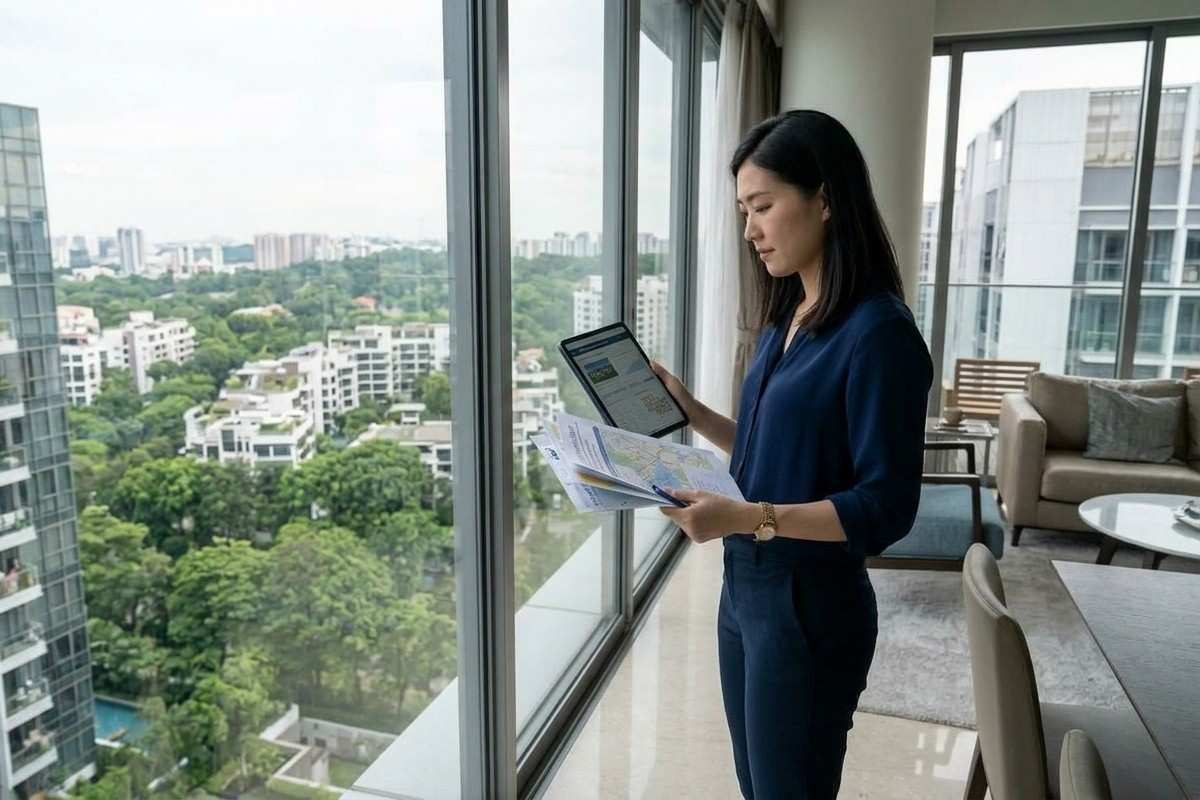
Many buyers approach property investment in Singapore expecting rental income and eventual price appreciation to justify the cost of owning an additional property. That calculation changes once mortgage repayments, taxes, maintenance and other expenses are included. Two situations show how this happens. An investment condominium may generate negative cash flow, while an ageing HDB flat held as a long-term asset can become harder to sell as its remaining lease shortens.
Negative cash flow and weak rental yield
A rental property can generate income and still require its owner to top up cash every month. The illustrative example below shows how a condominium let out at $3,800 a month can fall short of its own costs.
| Monthly cash flow | Example |
| Mortgage repayment (interest and principal) | $3,800 |
| Maintenance fees | $400 |
| Property tax | $564 |
| Total monthly outlay | $4,764 |
| Monthly rental income | $3,800 |
| Monthly cash shortfall | $964 |
Note: These are illustrative figures. The property tax figure assumes an Annual Value of $45,600 (12 months of rent) taxed at the non-owner-occupied residential rates of 12% on the first $30,000, 20% on the next $15,000 and 28% on the next $15,000. IRAS determines the actual Annual Value, which may differ from the rent you collect. For market rents by district, refer to URA’s rental statistics.
A $964 shortfall adds up to about $11,600 a year. That is before vacant months, repairs, agent fees and income tax on the net rental income.
Not all of this shortfall is a pure cost. Part of each mortgage repayment reduces the loan principal and builds equity. Strictly speaking, a property is negatively geared only when rent fails to cover mortgage interest plus other holding costs. The cash still has to come from somewhere. If the gap persists, the investment increasingly depends on future price appreciation to make up for it.
Rental yield in Singapore is more useful when measured net of ownership costs rather than on gross rent. Opportunity cost matters too, because capital tied up in a weak-performing property is unavailable for uses that may offer a better return.
Interest rates and upfront costs can change the numbers
Mortgage rates are often the swing factor in whether an investment property produces or consumes cash. Most Singapore home loans are priced using SORA, or the Singapore Overnight Rate Average, which MAS administers, plus a bank spread.
The 3-month compounded SORA rose from about 0.2% in January 2022 to about 2.9% by December 2022. It peaked above 3.6% in 2023, pushing many floating mortgage rates past 4% once the bank spread was added. Investors who bought when rates were near zero saw repayments rise, and some properties that had produced positive cash flow turned negative.
Rates have since eased, with 3-month SORA falling to a 1.3% range in October 2026. Stress-testing repayments at a higher rate shows whether a property would stay affordable if borrowing costs rise again. Upfront charges also add to the cost of a second or third property. According to IRAS, Additional Buyer’s Stamp Duty (ABSD) applies on top of normal stamp duty. The ABSD rates below have applied since 27 April 2023.
| Buyer profile | 1st property | 2nd property | 3rd and subsequent properties |
| Singapore Citizen | 0% | 20% | 30% |
| Singapore PR | 5% | 30% | 35% |
| Foreigner | 60% | 60% | 60% |
MAS also limits borrowing through the Total Debt Servicing Ratio, or TDSR. For property loans from 16 December 2021 onwards, total debt repayments are capped at 55% of gross monthly income, which restricts how much an investor with existing loans can borrow for another property.
Ageing HDB flats can lose resale value and liquidity
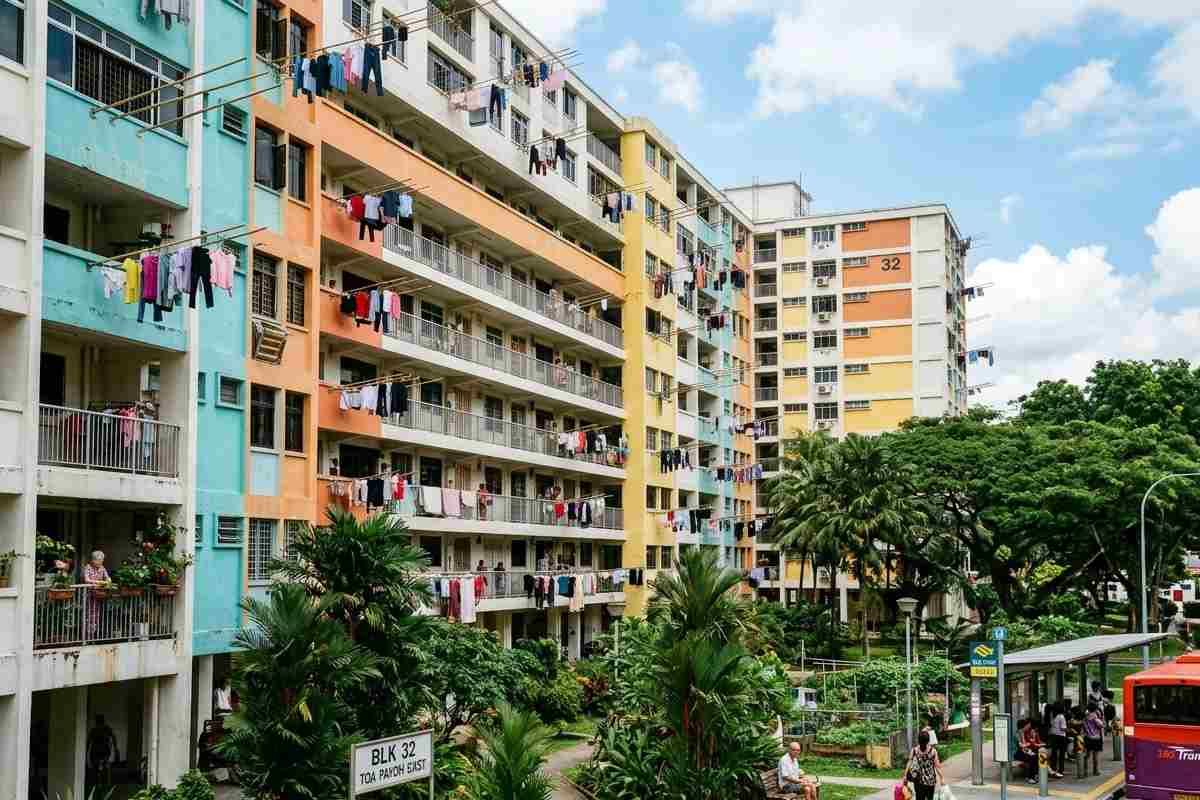
Many owners treat their HDB flat as a store of value, whether they live in it, rent it out after the Minimum Occupation Period or plan to monetise it in retirement. As the remaining lease runs down, that value becomes harder to realise because lease length affects both financing and resale demand.
According to HDB, most HDB flats have a 99-year lease from the date of completion. When the lease ends, the flat returns to the government without compensation. How much CPF a buyer can use depends partly on whether the remaining lease covers the youngest buyer to age 95. The table below shows how CPF usage changes as the lease runs down.
| Remaining lease | CPF usage for the buyer |
| Covers youngest buyer to age 95 | Full CPF usage allowed |
| At least 20 years but does not cover youngest buyer to age 95 | Pro-rated reduced amount based on remaining lease |
| Less than 20 years | CPF generally cannot be used |
When buyers cannot use their full CPF savings, they need more cash upfront. This shrinks the pool of potential buyers and can put pressure on resale prices. Owners also should not count on redevelopment. SERS is selective and has only been offered to blocks with significant redevelopment potential. The last SERS project was announced in April 2022, and the government has said there are no new SERS projects in the pipeline.
VERS was announced at the 2018 National Day Rally as a longer-term approach for ageing HDB estates. In August 2025, the Ministry of National Development said the first VERS sites were expected in the early 2030s. No precincts have been selected, and key details including compensation offers and the voting threshold have not been finalised.
Read more: How Much Salary Buys Landed Properties in Singapore in 2026?
2. An endowment policy in Singapore may return less than expected

An endowment policy in Singapore combines life insurance coverage with a savings component that pays out a lump sum at maturity. It can look attractive because the maturity payout exceeds the premiums paid. Once that gain is spread across a long policy term, though, the effective yearly return may be lower than expected. The total of guaranteed and non-guaranteed benefits determines what the policy may eventually pay.
Guaranteed and non-guaranteed benefits work differently
Most endowment policies in Singapore are participating policies, so part of the eventual payout depends on the performance of the insurer’s participating fund. The table below sets out how each part of the benefit works.
| Type | What it means | Is it fixed? |
| Guaranteed benefits | Minimum payout promised in the contract | Yes |
| Non-guaranteed bonuses | Additional payouts linked to fund performance | No |
| Total illustrated benefits | Guaranteed and non-guaranteed benefits added together | No, this is a projection rather than a promise |
According to LIA, non-guaranteed bonuses depend on participating fund investment performance, claims paid from the fund and operating expenses. Insurers may reduce these bonuses when fund performance or the economic outlook is unfavourable. LIA also states that illustrated returns shown in policy documents are for reference and do not represent actual fund performance. The eventual maturity payout may be higher or lower than the illustration.
The annualised return matters as much as the payout
Annualised return measures what the locked-up money effectively earned each year. The example below shows how a 25% total gain translates over 20 years.
| What you see | What it actually means |
| Paid S$10,000 per year for 20 years, totalling S$200,000 | Each premium is locked in until maturity, so the earliest premiums are committed for 20 years |
| Maturity value shown as S$250,000 | S$50,000 more than the premiums paid |
| Appears to be a 25% total gain | Spread over 20 years, the annualised return is about 2.1% a year |
Note: The 2.1% figure assumes premiums are paid at the start of each year and the maturity value is received at the end of year 20. You can estimate a policy’s annualised return by working backwards from the maturity value with a compound interest calculator. If the result is lower than the CPF Ordinary Account interest rate, currently 2.5% a year, the policy may not be the most efficient use of locked-away capital.
Insurance coverage is also part of the picture. An endowment provides a death or disability benefit alongside its savings component, so comparing its return with CPF OA or a savings account alone does not capture everything the policy provides.
Read more: Calculating Your Life Insurance Returns
Consider the full policy before surrendering it
A disappointing projected return alone does not decide whether surrendering makes sense. The surrender value, guaranteed benefits, remaining premiums, remaining term and attached insurance coverage all affect the trade-off. Surrendering in the early years typically returns less than the premiums paid. Closer to maturity, most premiums have already been paid, so continuing may cost relatively little compared with what surrendering gives up. A reduced paid-up option may also let some policyholders stop paying premiums while keeping a smaller guaranteed sum.
3. A family business can be worth millions but remain difficult to sell
A family business can hold substantial value on paper without giving its owner ready access to that money. What the owner can actually realise depends on whether a buyer exists, how dependent the business is on its founder and whether it can keep operating after ownership changes. Take a business valued at S$5 million. The table below shows why that headline valuation may differ considerably from what the owner could realistically receive.
| Situation | What it means for the owner |
| No clear successor identified | Business value can fall if the founder steps away |
| Business depends on the founder’s relationships | Buyers may apply a discount for that risk |
| No obvious external buyer | An exit could take years to arrange |
| Family disagreement on selling | A sale may be blocked or delayed |
| Valuation based on peak-year revenue | A buyer may renegotiate using more conservative assumptions |
A private business cannot be sold as easily as a listed stock, so the more useful figure is what the owner could realistically receive in an exit and how long that would take. Succession affects that figure too. According to Enterprise Singapore, succession planning is a critical challenge for local family businesses, and a business that depends heavily on its founder is harder to sell at full value.
Concentration risk can make the impact larger
Concentration risk arises when a business owner’s income, savings, property and retirement plans all depend on the same business. If the business struggles just as the owner prepares to retire, income and net worth can fall at the same time. Building liquid savings and investments outside the business provides a buffer while letting the business remain a productive long-term asset.
Five questions to assess whether an asset is building wealth
None of these assets is inherently a bad financial decision. What matters is whether each one still does what it was acquired to do. The five questions below separate an asset’s apparent value from what it actually contributes to your finances.
| Question | What to look at | Warning sign |
| Does it generate or drain cash flow? | Monthly income compared with monthly costs | Consistent shortfalls without a clear payoff |
| What is the actual return? | Amount invested, years held and all costs | Weak return relative to alternative uses of the money |
| How liquid is it? | How quickly the asset could be sold or its value accessed | Months or years to exit or a large discount required |
| How concentrated is your exposure? | Share of income, savings and retirement plans tied to this asset | Most of your financial position depends on one asset |
| Is the decision forward-looking? | Whether you are holding for future value rather than habit | Keeping the asset only because of what has already been put into it |
Read more: 5 Costly Financial Mistakes Singaporeans Make in Their 30s
Conclusion
Property investment in Singapore, endowment policies and family businesses can each be sound holdings, but their headline value says little about what they contribute today. Run each one through the five questions above, and treat a persistent warning sign as a prompt to restructure, reduce or exit rather than wait.
Frequently asked questions
Can property investment in Singapore become a liability?
Yes. A property can become a financial burden when monthly costs consistently exceed rental income or too much capital is tied up relative to the return it generates.
What should you consider before surrendering an endowment policy?
Consider the surrender value, guaranteed benefits, remaining premiums, policy term, insurance coverage and effective annualised return. Non-guaranteed bonuses are not fixed, so guaranteed and projected benefits should be assessed separately.
Can a profitable family business still become a wealth trap?
Yes. A profitable but closely held business can leave its owner with substantial wealth on paper but limited liquid capital, especially when income, savings and retirement plans all depend on the same business.