

Singapore has experienced rapid economic growth, but rising cost pressures continue to affect households. The Monetary Authority of Singapore (MAS) and the Ministry of Trade and Industry (MTI) reported that core inflation rose to 1.4% in February 2026, driven by higher prices in services, food, and retail goods. These rising costs reduce purchasing power and make it increasingly important to assess and maintain financial health.
Key takeaways
- Financial health in Singapore measures how well you manage income, savings, debt, and insurance across different life stages.
- Median income benchmarks provide a reference point for evaluating financial stability.
- A savings rate of 20–30% supports resilience and long-term wealth building.
- Emergency funds should cover at least six months of expenses.
- Debt repayments should ideally remain below 30–35% of monthly income.
- Adequate insurance coverage protects against major financial risks such as medical costs and income loss.
What is financial health in Singapore
Financial health in Singapore refers to an individual’s ability to take proactive steps to manage finances by addressing savings, insurance, and investment needs in order to meet life goals and prepare for different life stages, as outlined by the Monetary Authority of Singapore (MAS) and the financial industry in the Basic Financial Planning Guide.
The United Nations Secretary-General’s Special Advocate for Inclusive Finance for Development (UNSGSA) outlines four core components that define financial health. These components provide a structured framework to evaluate financial stability and long-term readiness:
1. Cash flow or stability
Individuals manage cash flow by ensuring their income consistently exceeds their expenses. Strong cash flow allows them to meet daily financial obligations without relying on debt.
2. Insurance or protection
Individuals use insurance to protect themselves against large and unexpected financial losses. Insurance transfers financial risk from events such as medical emergencies or income loss to an insurer.
3. Emergency fund or resilience
Individuals build emergency savings to maintain liquidity during unexpected events. These funds allow them to cover short-term expenses or income disruptions without taking on debt.
4. Long-term wealth building or growth
Individuals build long-term wealth by saving and investing consistently. This approach helps them achieve financial goals, keep pace with inflation, and secure financial independence.
Metric 1: Income benchmark in Singapore
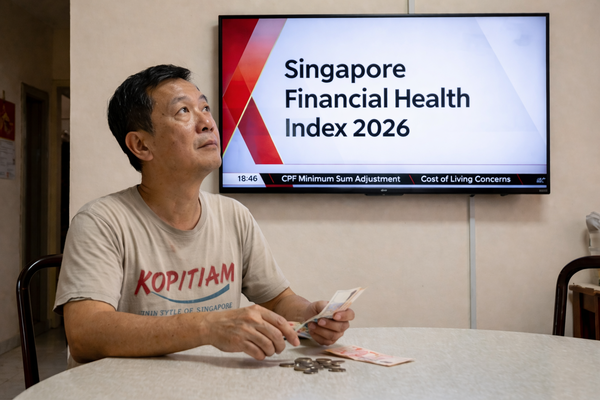
Income comparison against national benchmarks evaluates earning capacity relative to the broader population and determines financial stability.
As of 2025, the median gross monthly income for full-time employed residents in Singapore is S$5,775, while median household income is S$12,446. These benchmarks reflect typical earnings and provide a reference for financial positioning.
The following income comparison guidelines explain how an individual’s earnings relate to Singapore’s national median income benchmarks:
- Income near the median indicates baseline financial stability.
- Income below the median may limit savings and increase financial strain.
- Income above the median provides greater capacity for savings and investments.
While income alone does not determine overall financial health, it serves as a fundamental starting point for evaluating financial stability and planning next steps.
Read more: How To Avoid Living Paycheck to Paycheck
Metric 2: How to calculate your savings rate
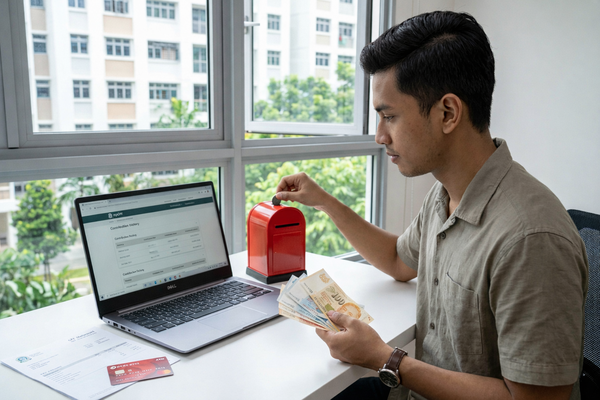
The savings rate measures the proportion of income set aside for future use and is a direct indicator of financial resilience and long-term planning capacity. It can be calculated using the following formula:
Savings rate = Amount saved ÷ Total income
According to the Department of Statistics Singapore (SingStat), the overall personal savings rate was approximately 32.0% of disposable income in 2025, including CPF contributions. This reflects aggregate behaviour and may differ from individual cash savings capacity.
This calculation can include both cash savings and long-term contributions such as CPF, depending on how an individual defines their total savings.
For practical financial planning, the following benchmarks apply:
- Below 10%: Financially vulnerable, with limited buffer for unexpected expenses.
- 20–30%: Financially healthy, with consistent ability to save and invest.
- 40% or more: Financially strong, with high capacity for wealth accumulation.
Metric 3: Do you have enough emergency savings?
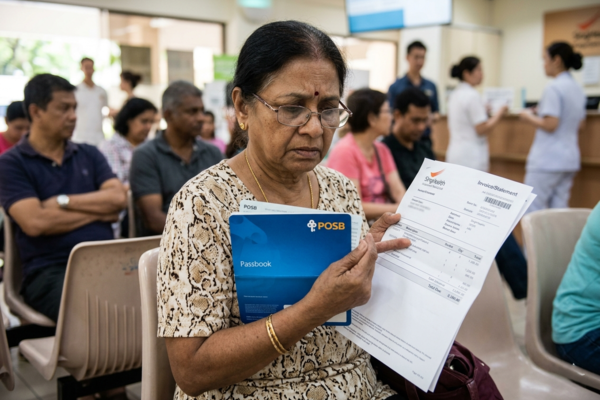
An emergency fund refers to savings set aside to cover unplanned expenses that cannot be funded through regular income. These expenses typically include unexpected events such as home repairs, job loss, and medical emergencies.
How to calculate emergency fund adequacy
Emergency fund adequacy, also known as the liquidity ratio, measures how long an individual can sustain expenses using available cash reserves.
Emergency fund adequacy = Available cash ÷ Monthly expenses
Individuals can use the Planner Bee emergency calculator to estimate their emergency fund adequacy based on current cash holdings and monthly expenses.
Recommended emergency fund
In Singapore, the Central Provident Fund (CPF) recommends maintaining at least six months of monthly expenses as emergency savings. This benchmark provides a buffer against income disruptions and unexpected financial shocks.
Individuals with variable income or less stable employment may require up to 12 months of expenses to achieve a higher level of financial security.
Metric 4: Debt-to-Income ratio (DTI) in Singapore

The debt-to-income (DTI) ratio measures how much of an individual’s income is committed to debt repayment. It serves as a key indicator of financial health because it directly affects financial flexibility and the ability to manage unexpected expenses. A higher DTI ratio reduces available cash flow and increases vulnerability to income disruptions.
How to calculate DTI ratio
The debt-to-income ratio calculates the proportion of income used to service debt obligations. These obligations typically include housing loans, credit card balances, and car loans.
DTI ratio = Total monthly debt repayments ÷ Net monthly income
This calculation helps individuals assess whether their current debt levels remain manageable relative to their income.
Recommended debt levels
In Singapore, the Monetary Authority of Singapore (MAS) sets a Total Debt Servicing Ratio (TDSR) limit of 55% of gross monthly income for property loans. This limit acts as a regulatory ceiling rather than a recommended personal benchmark.
Financial planners typically adopt more conservative thresholds to maintain financial flexibility. A commonly used guideline is to keep total debt repayments below 30–35% of monthly income. This range allows individuals to manage debt obligations while maintaining sufficient capacity for essential expenses and savings.
Read more: 7 Ways To Improve Your Credit Score
Metric 5: Insurance coverage in Singapore

Insurance coverage adequacy ensures protection against major financial risks that cannot be managed through savings alone.
Core insurance coverage includes:
1. Hospitalisation insurance
Hospitalisation insurance covers medical expenses arising from accidents or illnesses, including hospital stays, surgeries, and treatments. It reduces the financial burden of healthcare costs, which can otherwise significantly impact savings.
2. Life insurance
Life insurance provides financial support to dependants in the event of death or total permanent disability. It ensures that outstanding liabilities and living expenses can still be met, protecting the financial stability of the household.
3. Critical illness insurance
Critical illness insurance provides a lump-sum payout upon diagnosis of specified serious conditions such as cancer or stroke. This payout helps cover treatment costs, income loss, and recovery-related expenses that are not fully addressed by hospitalisation plans. It complements medical insurance by providing financial flexibility during recovery.
How to assess your insurance coverage
Assessing insurance coverage adequacy starts with quantifying how much protection you actually need based on your financial situation. This includes factoring in your monthly living expenses, income, outstanding liabilities, and future obligations such as dependants or long-term goals.
A practical approach is to estimate the amount required for income replacement and essential expenses over a defined period (e.g. during recovery from illness or loss of income), rather than relying solely on arbitrary coverage amounts. Tools like insurance calculators help translate these inputs into a clearer benchmark of required coverage and highlight any shortfall.
As a general guideline:
- Early Critical Illness (ECI) coverage should provide about 2 years of income to support recovery and temporary loss of earnings
- Critical Illness (CI) coverage should provide about 5 years of income to account for longer-term financial impact
Pro tip: To get a personalised estimate, try Planner Bee’s insurance calculator.
Coverage gaps arise when your existing policies fall short of these calculated needs, for example, not covering enough years of income, underestimating medical costs, or overlooking future financial responsibilities.
Regularly reviewing your coverage against these benchmarks ensures it remains aligned with your current life stage. Your insurance should also complement your savings and emergency funds, forming a coordinated financial safety net rather than acting in isolation.
Read more: Must-Have Insurance Policies in Singapore
Quick self-assessment: Financial health checklist
This checklist evaluates financial health across key indicators of stability, resilience, and protection.
- Do you consistently earn more than you spend?
- Do you save at least 10–20% of your income?
- Do you have at least six months of emergency savings?
- Are your total debt repayments below 35% of your monthly income?
- Do you have insurance coverage in place?
Your responses can be interpreted as follows:
- Mostly yes: Indicates a generally strong level of financial health.
- Mixed responses: Highlights specific areas that require improvement.
- Mostly no: Suggests financial vulnerability and the need for immediate corrective action.
How to improve your financial health
Improving financial health requires strengthening core financial areas.
1. Manage debt effectively
Maintain debt repayments below 35% of income and prioritise reducing high-interest liabilities.
2. Build financial buffers
Establish an emergency fund and maintain consistent savings to improve resilience.
Read more: How to Save $100,000 by the Time You’re 30
3. Grow wealth
Once financial stability is established, surplus funds can be allocated towards investments to support long-term financial goals and keep pace with rising living costs.
4. Protect against financial risks
Adequate insurance coverage ensures protection against major financial shocks, including medical expenses and income loss.
Pro tip: For a more detailed assessment of suitable insurance coverage, consider requesting a personalised quote from Planner Bee.
Conclusion
Achieving financial health requires consistent effort and a clear understanding of key financial principles. Many individuals lack financial literacy and may not have a structured approach to improving their financial position.
Financial awareness begins with understanding income, spending patterns, and performance across key metrics, including savings, emergency preparedness, debt management, and insurance coverage. This should be followed by targeted actions to strengthen financial stability in the short term while building long-term financial security.
Although not all risks can be anticipated, maintaining strong financial foundations across these areas improves resilience and reduces the impact of unexpected events.