

Managing your money effectively is less about how much you earn and more about how well you structure your finances. Many people rely on a single bank account, but this often leads to blurred lines between spending, saving, and investing. A structured system using multiple accounts can improve clarity, discipline, and long-term financial outcomes.
Key takeaways
- The three-account system separates spending, savings, and investments for structured financial management.
- Each account serves a defined role for daily expenses, near-future needs, and long-term goals.
- Additional accounts are optional but useful in specific financial situations.
- Choosing the right bank accounts depends on your spending habits, savings goals, and risk tolerance.
- Automation and consistency are essential for maintaining the system effectively.
What is the three-account system and how does it work?
The three-account system is a structured financial framework that separates money into three distinct categories: daily spending, short-term savings, and long-term investments. Each account serves a specific purpose, reducing the risk of overspending and improving financial visibility.
This system works because it creates clear boundaries between consumption and wealth-building. Instead of treating all funds as interchangeable, it assigns roles to each dollar. This reduces decision fatigue and ensures that essential financial priorities, such as emergency savings and long-term investing, are consistently funded.
In practice, individuals using this system gain:
- Better control over cash flow.
- Reduced temptation to dip into savings.
- Improved ability to plan for both short-term and long-term goals.
This structured separation is particularly useful, where individuals often juggle high living costs, insurance premiums, and long-term commitments such as housing and retirement planning.
How to use the three-account system to manage your money
The three-account system assigns a defined function to each account. This structure ensures that income flows logically from spending to saving and ultimately to investing.
Account 1: Daily spending account

The daily expenses account functions as the central transaction account where income is credited and regular spending occurs.
This account typically supports:
- Daily spending via debit cards or PayNow
- Fixed expenses such as rent, utilities, insurance premiums, and subscriptions
- Credit card bill repayments
Practical example: If you earn $4,000 monthly, you may keep $2,500–$3,000 in this account to cover all monthly expenses. Using a bank account that offers cashback or spending rewards (e.g. on groceries or transport) can optimise everyday expenses.
Account 2: Savings account for emergency fund and short-term goals
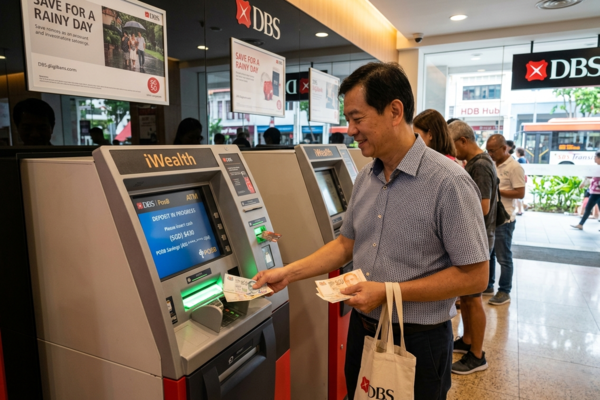
The near-future expenses account serves as a financial buffer and short-term savings pool. It protects you from unexpected events and prepares you for planned large expenses. An emergency fund should ideally cover at least six months of expenses, as this duration provides financial resilience during job loss or income disruption.
This account commonly supports:
- Emergency funds (job loss, medical costs not covered by insurance)
- Annual insurance premiums
- Planned purchases such as electronics or travel
Practical example: If your monthly expenses are $3,000, your emergency fund target should be approximately $18,000. This amount should be kept in a high-interest savings account that remains easily accessible.
Account 3: Investment account for long-term financial goals

The long-term expenses account supports wealth accumulation and helps achieve major financial goals beyond five years. This structure creates a clear progression in financial management:
- Account 1 enables daily spending.
- Account 2 provides financial protection.
- Account 3 builds long-term wealth.
This account typically supports:
- Property down payments
- Retirement planning (beyond CPF)
- Children’s education
Practical example: After building your emergency fund, you may invest $500–$1,000 monthly into ETFs or unit trusts to grow your wealth over time.
What investments should you use for long-term savings in Singapore?
Understanding investment options is essential because Account 3 is not meant for idle savings. Keeping long-term funds in a regular savings account exposes them to inflation risk, reducing purchasing power over time.
This section explains how different investment instruments support long-term financial growth:
- Shares: Offer ownership in companies and potential returns through dividends and capital gains. Suitable for higher risk tolerance and long investment horizons.
- Bonds: Provide fixed income and lower volatility, helping to stabilise a portfolio.
- Unit trusts or funds: Allow diversification through professionally managed portfolios, suitable for beginners.
- Exchange-Traded Funds (ETFs): Offer low-cost diversification and are widely used in Singapore for long-term investing.
- Real Estate Investment Trusts (REITs): Generate regular income and provide exposure to property markets without direct ownership.
By allocating funds into these instruments, investors can benefit from compounding returns over time, which is critical for achieving long-term financial goals such as retirement.
Read more: What Beginner Investors Should Know Before Getting Started
Do you really need three bank accounts?

Using three accounts is not mandatory, but it is highly effective for structuring finances. The system is flexible and can be expanded based on individual needs.
Freelancers and self-employed individuals
Freelancers should consider additional accounts when income becomes irregular or business transactions increase. A separate business account becomes necessary when:
- Managing multiple client payments.
- Tracking deductible expenses for tax reporting to IRAS.
- Setting aside MediSave and tax obligations.
Without separation, personal and business finances can become difficult to manage, increasing the risk of cash flow issues.
Couples managing shared finances
Couples benefit from adding a joint account when managing shared expenses and goals. This becomes useful when:
- Sharing household expenses.
- Planning for joint financial goals such as housing.
- Reducing friction from splitting payments.
A joint account improves transparency while allowing individuals to maintain financial independence.
Read more: Key Things To Know Before Opening a Joint Bank Account
Other individuals who may benefit
Beyond freelancers and couples, additional accounts may be useful for:
- Parents: Managing children’s education or childcare expenses.
- High-income earners: Segmenting savings across multiple banks to optimise interest rates and insurance coverage limits.
- Goal-oriented savers: Creating separate accounts for travel, large purchases, or lifestyle goals.
The key principle is not the number of accounts, but whether each account has a clear and defined purpose.
How to set up the three-account system
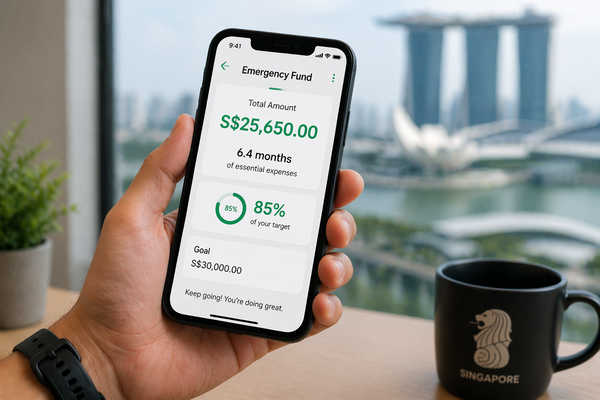
Setting up the system requires intentional decisions about account types, banks, and automation. The following steps ensure effective implementation:
1. How to choose the right bank accounts
Different accounts serve different purposes, and selecting the right one improves efficiency:
- Daily expenses account: Choose accounts that offer cashback, rebates, or spending rewards. These maximise value from everyday transactions.
- Near-future expenses account: Prioritise high-interest savings accounts. However, evaluate conditions such as minimum balances, salary crediting requirements, and spending criteria.
- Long-term account: This may not be a traditional bank account. Consider brokerage accounts or investment platforms that provide access to ETFs, funds, or bonds.
If you can meet the conditions consistently, a high-interest account is beneficial. Otherwise, a simpler account with fewer requirements may be more practical.
Read more: Singapore’s Best Savings Accounts
2. How much money to keep in each account
Building a strong financial base ensures that the three-account system functions sustainably without causing cash flow stress.
Start by calculating your true monthly expenses, including both fixed and variable costs. This typically includes rent or mortgage, utilities, insurance premiums, transport, groceries, and subscriptions. Many individuals underestimate irregular expenses such as annual insurance payments or quarterly bills, so it is important to account for these.
Once you have a clear figure, ensure that Account 1 consistently holds enough to cover at least one full month of expenses. This prevents shortfalls and reduces reliance on credit.
Next, begin building your emergency fund in Account 2. Instead of targeting six months immediately, break it into manageable milestones:
- First target: One month of expenses
- Second target: Three months
- Final target: Six months
This staged approach improves consistency and reduces the psychological burden of saving a large sum.
If your income is irregular, hold a slightly larger buffer in Account 1, such as one and a half to two months of expenses, to smooth cash flow fluctuations. The objective of this step is to ensure that your financial system is stable before it becomes optimised.
3. How to automatically save money every month
Automation is the most critical component of the three-account system because it removes reliance on manual discipline. Without automation, even well-planned systems tend to fail over time.
Set up automatic transfers to occur within one to three days after your salary is credited. This timing ensures that saving and investing are prioritised before discretionary spending begins. A typical automation structure looks like this:
- Transfer a fixed amount or percentage (e.g. 10–20%) from Account 1 to Account 2.
- Transfer a separate amount from Account 1 to Account 3 for investments.
In Singapore, most banks allow scheduled GIRO transfers or standing instructions, making this process straightforward. To improve effectiveness:
- Use percentage-based transfers if your income varies.
- Use fixed transfers if your income is stable.
- Increase transfer amounts gradually when your income rises.
Automation works because it enforces a “pay yourself first” principle. Instead of saving what remains after spending, you spend what remains after saving and investing.
4. Best banking features to use
Modern banking tools can significantly enhance how the three-account system is implemented, often reducing the need to open multiple separate accounts. Many Singapore banks provide features such as:
- Sub-accounts or “savings pockets”.
- Goal-based savings trackers.
- Automated categorisation of expenses.
These tools allow you to segment funds within a single account while maintaining clarity. Additionally, some banks offer:
- Cashback tracking dashboards.
- Alerts for meeting bonus interest conditions.
- Integrated budgeting tools.
Using these features improves visibility and reduces administrative effort. However, tools should support your system, not replace discipline. The goal is to use banking tools to enhance structure, not complicate it.
5. How often should you review your finances?
The three-account system is not static. Your income, expenses, and financial goals will evolve over time, so regular reviews are necessary to keep the system effective.
Conduct a structured review every three to six months, focusing on the following areas:
- Check whether your Account 1 balance consistently covers monthly expenses. If you frequently run short, your allocation needs adjustment.
- Assess whether your emergency fund is on track. Once it reaches your target, you can redirect more funds towards investments.
- Review whether your contribution rates align with your income growth. As your salary increases, your savings and investment amounts should also increase proportionally.
- Evaluate whether your current bank accounts are still optimal:
- Are you meeting high-interest account conditions?
- Are you maximising cashback or rewards?
- Are fees or requirements becoming restrictive?
- Major life events, such as job changes, marriage, or purchasing property, may require restructuring your accounts or adding new ones.
Regular reviews ensure that your system remains aligned with your financial goals rather than becoming outdated or inefficient.
Practical example: How the three-account system works with a $4,000 monthly salary
A structured example helps illustrate how funds flow across accounts:
- Salary credited: $4,000 into Account 1
- Monthly expenses: $2,800 spent from Account 1
- Transfer to Account 2: $700 (emergency fund / short-term goals)
- Transfer to Account 3: $500 (investments)
This structured allocation ensures that spending, saving, and investing happen consistently every month.
Why the three-account system fails for some people

The three-account system is simple, but poor execution can reduce its effectiveness. The following mistakes explain why some people struggle to see results:
- Opening too many accounts without clear purposes creates confusion and reduces visibility. The system works best when each account has a defined role.
- High-interest savings accounts often require strict conditions. If these are not met consistently, the expected benefits are lost.
- Without automation, saving becomes inconsistent and dependent on willpower rather than structure.
- Moving money from savings back into spending accounts weakens discipline and defeats the purpose of separation.
- Falling below minimum balances or missing conditions can result in unnecessary costs across multiple accounts.
Conclusion
Start by opening or designating three accounts today and assign each a clear purpose. Set up automatic transfers within the first three days of receiving your salary to prioritise saving and investing before spending.
Review your current bank accounts and optimise them based on your habits, switch to cashback accounts for spending, high-interest accounts for savings, and suitable platforms for investing.
Consistency matters more than complexity. A simple system, executed consistently, builds long-term financial stability and confidence.